

Every well-stocked cleaning cupboard also contains a bottle of glass cleaner. You can use it to make your windows shine again and ensure a clear view. But did you know that you can also use glass cleaner as a universal household cleaning agent? Thanks to its ingredients, the cleaner ensures that smooth surfaces anywhere in your home, such as your bathroom tiles, become streak-free.
But before you grab the all-rounder and spruce up your home, you should know that glass cleaner is not suitable for all surfaces. In this article, we tell you which surfaces should not come into contact with it.
6 surfaces that you should never treat with glass cleaner
Used incorrectly, glass cleaner can damage some surfaces instead of cleaning them. Find out which ones here:
Mirrors
Admittedly, this sounds a little unusual at first, as you are probably one of those people who clean their mirrors with glass cleaner. But you’d be better off not doing that in future. This is because the substances contained in the glass cleaner attack the silver coating and dissolve the film over time. This is shown by the mirror suddenly getting brown stains that look as if they have been burnt in. Particularly with old mirrors, it is therefore better to use warm water or, for more stubborn stains, white spirit.
Granite worktops
Unfortunately, using glass cleaner on granite or marble worktops is not a good idea. The porous stone surfaces are corroded by the ingredients, causing permanent damage. Glass cleaner also causes stains on these surfaces and makes them look dull and dirty.
Car windows
Very few people know that car windows should not be cleaned with standard glass cleaner. This can lead to streaks and stains, which are not only unsightly but also impair visibility. It should also never be used on tinted windows, as the ammonia it contains can damage the film. It is better to use a cleaner specifically for car windows that is less aggressive.
Screens
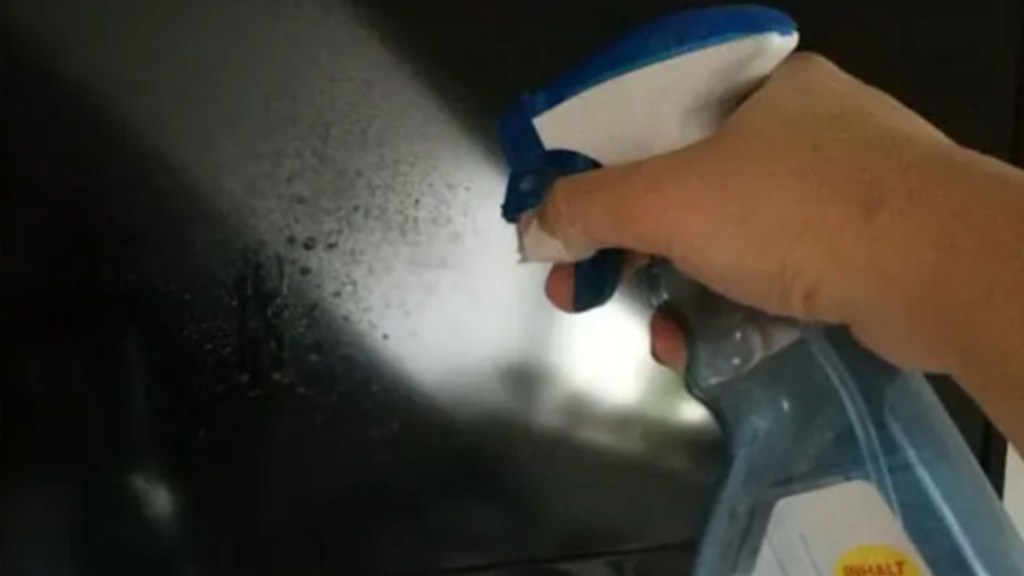
To remove fingerprints or grease stains from a laptop, computer or TV screen, many people like to use glass cleaner. Although this degreases and cleans well, its ingredients are too harsh for sensitive screens. Instead, use a microfiber cloth with a little water or a special cleaner for electronic devices.
Wood
Care should also be taken with wood. Untreated wood should never be cleaned with glass cleaner. It can be used on varnished wood from time to time, but a thin layer of varnish may well be attacked. In the case of leached or oiled wood, the glass cleaner draws the protective oil out of the wood, making it much more sensitive to stains and water. It is better to use special wood care products such as oil or wax.
Skin
Some time ago, there was a tip circulating on the internet to reverse unsuccessful self-tanning results with glass cleaner. However, this is not recommended as it damages the skin’s protective acid layer and dries it out extremely. Sensitive people may even develop a rash or allergies.
Some products that are effective and harmless to health when used on their own can have unexpected consequences when used in combination with other cleaners. As a general rule, you should therefore never mix glass cleaner, especially not with bleaching agents. This is because the ammonia contained in glass cleaner releases a potentially toxic substance called chloramine, which irritates the eyes, nose, bronchial tubes and throat.
So when cleaning, be careful which products you use for which things, as not all of them are universally applicable. Chemical cleaning agents in particular can damage the surfaces in your home by causing stains and streaks and thus have exactly the opposite effect to what you want to achieve.
Source: tippsundtricks
