Home Blog Page 1611

Myth busted: Should you really iron swollen parquet?

0

If you’ve ever had water damage in your home, you know how time-consuming repairs can be. Parquet flooring in particular is quickly affected by moisture. If you don’t react quickly enough and remove the water, the fine wooden floor will swell. The trick of ironing swollen parquet is circulating on the Internet. But does it really work? Here you can find out when the iron 🛒 can actually help – and when you should keep your hands off it.

Ironing swollen parquet: Myth or ingenious trick?

The idea behind the tip is as simple as it is tempting: heat and pressure are supposed to dry the wood and bring it back into shape. If the iron can make dents disappear from clothes, why not from parquet? Sounds logical, doesn’t it? Unfortunately not.

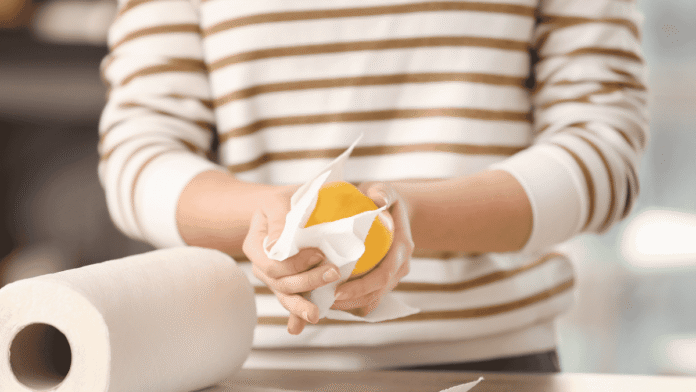
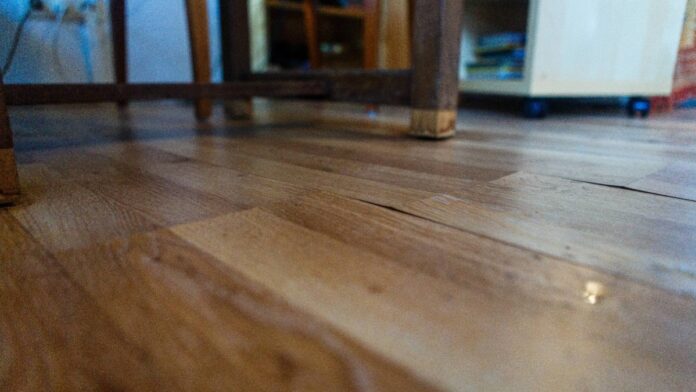
Does it really make sense to iron swollen parquet? Credit: IMAGO / Westend61, IMAGO / Manfred Segerer

Ironing swollen parquet may sound promising, but in most cases it’s a bad idea. Why? Because the problem lies deeper – literally.

Moisture problem beneath the surface

Swelling of parquet is often caused by penetrating moisture. This penetrates deep into the wood fibers and changes their structure. However, you can only reach the top layer with an iron. The damage on the inside remains – or gets worse.

Heat can ruin the wood

An iron produces a heat of over 200 degrees. If your parquet is varnished or sealed, there is a risk of fire from this punctual heat. The surface can be damaged: discoloration, burns and cracks are not uncommon.

The problem remains unsolved

Even if ironing seems to help in the short term, the moisture still remains in the wood. Without fixing the actual cause, such as a water leak or excessive humidity 🛒, the problem will soon return – often worse than before.

What you should do instead

Ironing swollen parquet is therefore not a good idea. Try the following methods instead:

  • Eliminate the cause: Check your home for possible water leaks, poor seals and excessive humidity. Ideally, this should be between 40 and 60 percent.
  • Targeted repair of parquet damage: Light sanding and resealing can help to smooth the surface. In the case of severe damage, it is usually necessary to completely replace individual planks.
  • Call in a specialist: If you are unsure, you should contact a parquet company or a floor layer. Professionals know exactly how to repair parquet damage correctly.

You may also be interested in these articles:


When the iron can still be useful

The trick with the iron is of course no coincidence. There are indeed situations in which the hot iron can be useful – but not for swollen parquet.

Dents in the wood

If a heavy vase has left unsightly dents on your parquet floor, an iron can work wonders. Place a damp cotton cloth on the dent and carefully run the iron over it. The moisture and heat will restore the compressed wood fibers to their original shape.

Slight scratches

If superficial, small scratches are visible on the wood, the iron can also help here, provided you proceed carefully. Again, use a damp cloth, which you place over the scratches, and carefully iron over them. The moisture and heat will allow the wood fibers to straighten up a little.

The idea of ironing swollen parquet is tempting, but not recommended. The damage is often deeper and requires a thorough repair and root cause analysis. For dents or small scratches, however, the iron can actually do your fine wooden floor some good.

Source: t-online.de

The links marked with the shopping cart 🛒 are affiliate links. The products are researched to the best of our authors’ knowledge and some are also recommended from personal experience. If you click on such an affiliate link and buy something through it, our editorial team will receive a small commission from the online store in question. For you as a user, the price does not change and there are no additional costs. The income helps us to offer you high-quality, entertaining journalism free of charge.


L’Impact des Casinos sur le Tourisme à Las Vegas

0

Las Vegas, souvent surnommée la "capitale mondiale du spectacle", est réputée pour ses maisons de jeu iconiques qui captivent des centaines de milliers de invités chaque exercice. En 2023, la commune a noté plus de 42 milliers de visiteurs, dont une importante portion a exploré des lieux tels que le Bellagio et le Caesars Palace. Ces établissements de jeu ne sont pas uniquement des lieux de pari, mais aussi des lieux pour les touristes proposant des shows, des établissements de restauration de réputation mondiale et des expériences exceptionnelles.

Le développement des établissements de jeu à Las Vegas a débuté dans les décennies 1930, avec l’ouverture du premier casino licencié, le El Rancho Vegas, en 1941. Depuis ce temps, la localité a subi une expansion significative, devenant un centre clé pour les amateurs de jeux d’argent. En 2022, les revenus des casinos de Las Vegas ont atteint 14,8 milliards de dollars, illustrant leur rôle crucial dans l’système économique proche.

Les établissements de jeu de Las Vegas engagent également dans des programmes soutenables pour attirer un auditoire plus étendu. Par exemple, le Venetian Resort a établi des approches écologiques, amoindrissant son impact écologique tout en proposant une aventure luxueuse. Pour en apprendre plus sur les tendances du voyage à Las Vegas, consultez cet article sur The New York Times.

Pour les touristes, il est essentiel de organiser leur séjour afin de améliorer leur expérience. Voici quelques conseils pratiques : bloquez vos spectacles à l’préalable, découvrez les diverses cuisines proposées dans les établissements de restauration des maisons de jeu, et n’oubliez pas de tirer parti des attractions gratuites comme les fontaines du Bellagio. Pour plus d’détails sur les loisirs à Las Vegas, consultez Casino en ligne fiable.

En synthèse, les établissements de jeu de Las Vegas ont un fonction crucial dans l’attrait des touristes et le dynamisme financier de la localité. En associant paris, loisir et restauration, ils poursuivent d’progresser pour répondre aux attentes d’un spectateur hétérogène, tout en aidant à la célébrité globale de Las Vegas.

Tidiness: How to pack boxes correctly for a move

0

You’ve probably already been through a move or two, haven’t you? When you think back, you might also remember the stress involved. Moving house is often not only emotionally challenging, but also physically exhausting. But with a few tricks, you can at least make packing your moving boxes easier – this will not only protect your back and nerves, but also your belongings. Find out here how you should pack your moving boxes 🛒 so that you can at least eliminate this stress from your future memories.

The great art of packing moving boxes

In principle, it’s quite simple: put the heavy things at the bottom of the box and the light things on top. In reality, however, things turn out differently and in the end, everything is stuffed into boxes that are far too small. That’s over now! You’ll be well prepared for your next move if you follow these tips on how to pack your moving boxes correctly.

Get moving boxes in good time

Do you have a move coming up soon? Credit: IMAGO / Action Pictures

Leaving things until the last minute makes little sense when moving house. The first boxes should be packed a week before the removal van arrives at your door, with things that you don’t need every day. Roughly calculate one box per square meter of living space – the actual number of moving boxes will of course also depend on the number of people living in the household and the number of possessions. Choose specially reinforced book boxes for books 🛒. Instead of buying new moving boxes before packing, you can also rent them or use reusable plastic boxes.

Tip: Take the time to clear out before packing the moving boxes. That way you won’t be lugging unnecessary things from one home to the next.

Pack systematically – room by room

It sounds trivial, but pack your belongings room by room in your moving boxes. Even if the magazines from the living room still have room in the bathroom box, this will only cause confusion when unpacking. And make sure that the handles on the boxes always remain free – so don’t pack the boxes too full.

In addition to a clear room name (e.g. “kitchen”), you should also write a brief overview of the contents (“pots, pans, knife block”) and a consecutive number on the boxes. Create a simple inventory list on paper or using an app – this will help you find the right item in a stack of 40 boxes in seconds.

Tip: Save two moving boxes as a reserve. In the end, these will hold all the odds and ends that are still lying around in the apartment.


You might also be interested in these articles:


Packing books, crockery and glass correctly in moving boxes

Bookworms have a particularly heavy load to carry when moving house, because books are not only full to bursting with imaginative stories, they can also be quite heavy. Divide your books into several moving boxes and place them spine to spine on the bottom of the box. This will prevent unsightly dog-ears.

To pack your glasses and crockery in a break-proof way, you should use packing paper, bubble wrap 🛒, towels, socks, tea towels or comforter covers as padding instead of newspapers. This is because the printer’s ink can leave unsightly marks on your porcelain.

Tip: Make sure that your moving boxes do not exceed the 20 kilogram mark when packing. If you want to transport several heavy boxes, a sack truck is recommended 🛒.

If you follow these tips when packing your boxes, you are guaranteed to avoid the expected chaos on moving day. Our checklist for your move provides additional clarity. Pack systematically, keep an overview and take a moment after the work is done to open the first box in your new home – ideally the one in which you chilled the champagne. Cheers to a successful new start!

Source: immowelt.de

The links marked with the shopping cart 🛒 are affiliate links. The products are researched to the best of our authors’ knowledge and some are also recommended from personal experience. If you click on such an affiliate link and buy something through it, our editorial team will receive a small commission from the online store in question. For you as a user, the price does not change and there are no additional costs. The income helps us to offer you high-quality, entertaining journalism free of charge.
Cleaning: Why you should always have kitchen roll in the fridge

0

Do you have kitchen roll in your fridge? The absorbent and tear-resistant paper is usually stored under the sink or in a special holder 🛒. But there are a few tangible advantages to storing it in the fridge. Here you can find out how to use kitchen paper not only to keep food fresher, but also to keep your fridge clean.

Kitchen roll in the fridge has these advantages

Kitchen roll or kitchen paper is indispensable for many people in the kitchen – whether it’s for wiping up spilt milk or dabbing meat. But kitchen roll is also really useful in the fridge.

That’s why you should put kitchen roll in your fridge. Credit: IMAGO / Noah Wedel

Vegetables keep longer

Vegetables and salad quickly become mushy or moldy in the fridge due to condensation. If you place kitchen paper in the vegetable compartment in the fridge, the moisture is absorbed and the food stays fresh and crisp for longer.

Kitchen roll is also a good help for foods that should not come into contact with certain other foods during storage. This applies to mushrooms, for example, which should be stored separately from leafy vegetables (lettuce, parsley, white cabbage, etc.). To protect them, you can simply wrap the food in question in a piece of kitchen roll.


You may also be interested in these articles:


The fridge gets clean faster

Another advantage of kitchen paper in the fridge is that it absorbs dirt. Instead of wiping out the fridge again and again or struggling with stubborn encrustations on the shelves, you can simply use the kitchen paper as a base, dispose of it once it is dirty and replace it with new paper.

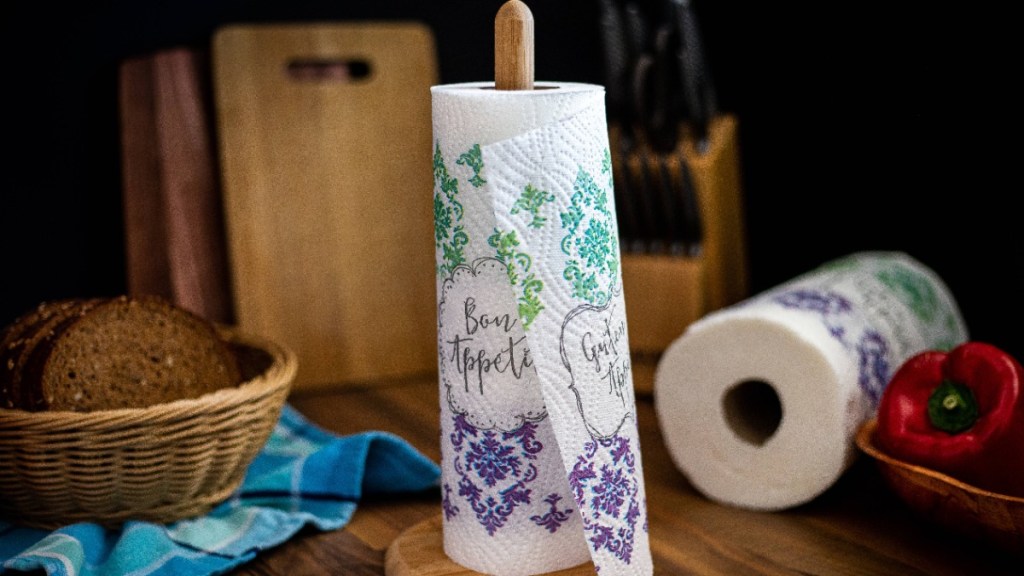
a colorful kitchen roll
Not every kitchen roll is suitable for contact with food. Credit: IMAGO / MiS

However, if you want to use kitchen roll in the fridge, you should bear the following in mind:

  1. According to Ökotest, not all kitchen rolls are suitable for contact with food as they contain the potentially carcinogenic substance chlorpropanol 3-MCPD.
  2. To protect the environment, you should buy kitchen rolls made from recycled paper. Alternatively, you can of course also use tea towels.

Despite all the enthusiasm for this versatile household helper, you should also know that there are 5 things for which kitchen roll is unsuitable. There are also alternatives to kitchen roll for many household tasks.

Sources: familyhandyman, br

The links marked with the shopping cart 🛒 are affiliate links. The products are researched to the best of our authors’ knowledge and some are also recommended from personal experience. If you click on such an affiliate link and buy something through it, our editorial team will receive a small commission from the online store in question. For you as a user, the price does not change and there are no additional costs. The income helps us to offer you high-quality, entertaining journalism free of charge.
Cleaning: Which is better – dishwasher or hand washing?

0

Washing dishes is an activity that needs to be done every day. After all, a regular three meals a day produces a lot of dirty cups, plates and cutlery. Many households use dishwashers instead of hand washing. But which of the two methods is better for the environment and cheaper? Find out here!

Dishwasher versus hand washing: which method is better?

The idea that washing up by hand uses less water and energy than washing up in a dishwasher is an obvious one, but it is not always true. This has been discovered by an initiative of the Federal Ministry for Economic Affairs and Energy (BMWi). Find out here which cleaning method can really reduce your water and electricity costs.

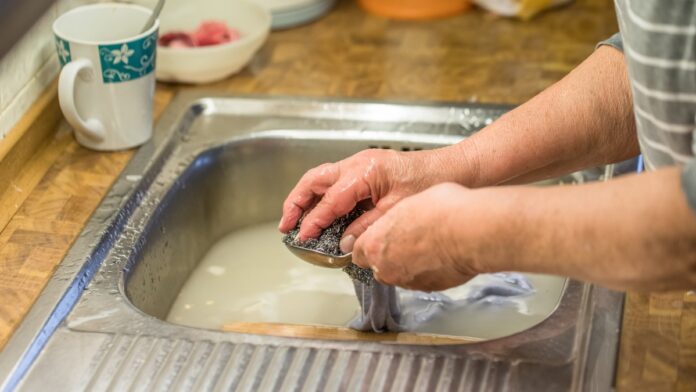
Which method do you use to get your dishes clean? Credit: LianeM – stock.adobe.com, Lars Koch – stock.adobe.com

What are the benefits of the dishwasher?

According to the BMWi initiative, when the dishwasher is fully loaded, up to a third less electricity and almost half less water is used compared to washing dishes by hand. A comparative study by the University of Bonn shows even more savings potential: washing dishes by hand consumed an average of 46 liters of water. In contrast, the same amount of dishes could be washed in the dishwasher with only 15 liters of water. Newer models sometimes use even less water.

5 tips for using your dishwasher even more efficiently:

  1. Fully loadedEvery tenth wash cycle could be saved if the dishwasher was fully loaded every time.
  2. Avoid pre-rinsing: Modern machines also clean dishes without pre-washing. Rinsing under running water is therefore unnecessary in most cases.
  3. Select an economical programAn economy or short program is completely sufficient for light soiling and uses less electricity. The Eco program, for example, takes up to four hours, but requires less electricity as the water is only heated to 40 °C.
  4. Cleaning the dishwasher sieveA clogged strainer prolongs the wash cycle, causing the dishwasher to consume more energy. Therefore, clean it at regular intervals.
  5. Ensure good conditionsPay attention to the water hardness and dose detergent, salt and rinse aid accordingly.

You may also be interested in these articles:


What are the advantages of hand washing?

Compared to dishwashers, hand washing uses detergents that are less aggressive. Dishwasher tablets contain phosphates, which remove incrustations and burnt-on food, but are harmful to the aquatic environment. When washing up by hand, on the other hand, it is sufficient to soak the dirty dishes or scrub them with a sponge and a little washing-up liquid.

To wash dishes by hand as sparingly as possible, you should always fill the sink with warm water and washing-up liquid instead of cleaning the dirty dishes under running water. Depending on how many dishes need to be washed, it may make sense to change the water in between. Always make sure to wash the dishes that are the least dirty first.

Number check

According to researchers at the University of Bonn, washing dishes by hand consumes an average of between 0.2 and 16 kilowatt hours and 14 to 447 liters of water. The dishwasher uses between 1 and 2 kilowatt hours and 15 to 22 liters of water for the same amount of dishes. This means that in most cases, using a dishwasher costs significantly less water and electricity than washing dishes by hand.

Conclusion

Which method is really cheaper in the end depends above all on the correct behavior of the consumer. If you use and load your dishwasher correctly, you can save more water and electricity when cleaning dirty dishes than someone who washes dishes by hand without any planning. On the other hand, thoughtful washing up by hand can be cheaper than using an incorrectly loaded dishwasher. In addition, washing up by hand avoids the use of aggressive and chemical detergents, which in turn benefits the environment.

Sources: t-online, br, geo

Household: Harmful substances discovered in kitchen roll – how to protect your health

0

You reach for kitchen roll several times a day to wipe up splashes of fat, wipe out your pan before washing it or dab a piece of meat. But have you ever wondered what exactly is in kitchen roll and whether it is really as safe as it seems? In this article, you’ll find out what you should look out for when buying kitchen roll, which ingredients are problematic and how to use kitchen roll sustainably.

Practical, but not always safe

Kitchen paper is as much a part of everyday life as salt and pepper. Once used, it ends up straight in the bin. That’s why it’s worth taking a closer look: Many kitchen rolls are made from virgin pulp – i.e. from trees that have been felled specifically for this purpose. Some of this wood comes from countries with a high risk of deforestation, such as Brazil, South Africa or Russia. Recycled paper is clearly the better choice here, as it not only saves energy and water, but also a lot of CO₂.

How to recognize sustainable products

Choose kitchen rolls made from 100% recycled paper. They use significantly fewer resources during production and protect the forests. Also look out for seals such as the “Blue Angel”, which identify environmentally friendly products. Nevertheless, even recycled kitchen paper is a disposable product. A cloth that you can use several times is often sufficient for simple cleaning tasks.

Kitchen roll does not belong in the organic waste

Although some manufacturers advertise it as “biodegradable”, you can only dispose of kitchen roll in the organic waste garbage can in exceptional cases – namely when it is used as packaging for kitchen waste. Otherwise, used kitchen roll belongs in the residual waste. This is the only way to keep organic waste free of foreign matter.

Kitchen roll and food: this combination can be risky

Many people use kitchen roll to dab food. This is where things get critical: in a recent test, laboratories found bisphenols such as BPA and BPS in almost all kitchen rolls – even in products made from recycled paper. These substances are considered to have a hormonal effect and can be harmful to health. The chemicals dissolve particularly strongly when greasy food remains in contact with the paper for a long time.

Be careful when in contact with food: Kitchen roll is not as harmless as previously thought. Credit: IMAGO / Westend61

How to use kitchen roll correctly – without risk

Avoid direct contact with food – especially with recycled kitchen rolls. It is better to use them only for cleaning or soaking up liquids. If you want to be on the safe side, use kitchen towels for food preparation that are expressly labeled for this purpose or only use kitchen paper for short periods of time.

Choose kitchen roll carefully – and use it sparingly

Kitchen roll remains a practical helper, but should be used wisely. Choose products made from recycled paper, look at the ingredients and avoid unnecessary contact with food. This will not only protect you, but also the environment.


You may also be interested in these articles:


Kitchen roll is an indispensable part of everyday life, but it has its downsides. When buying it, look for recycled quality, avoid unnecessary contact with food and dispose of it correctly. With a little mindfulness, you can also make a small but important contribution to your health and the environment with kitchen roll.

Follow Geniale Tricks on WhatsApp to make sure you don’t miss any more tips and tricks in future!

Source: Ökotest

Houseplants: How to produce surprisingly beautiful flowers with your hemp bow

0

Houseplants: How to make your hemp produce surprisingly beautiful flowers

Laundry: This tablet from the medicine cabinet turns gray laundry white again

0

Aspirin for white laundry – it sounds crazy at first, but it’s a real insider tip! No matter how hard you try to wash your white laundry properly, it will eventually get it: the dreaded gray haze. Once it’s there, the clothes seem to sink more and more into a dirty shade of gray with every wash. All you need is a simple ingredient from your medicine cabinet to put an end to the problem. The trick actually works – and better than you think!

How aspirin whitens the laundry

So: Grab five 325-mg aspirin tablets and first dissolve them in eight liters of hot water. You can also break the tablets so that they dissolve more quickly.

Now place your greying clothes in the solution and leave them there for eight hourspreferably overnight. Make sure that all items of clothing are covered by the water. Alternatively, you can add the tablets directly to the wash cycle in the machine, but the better option is to dissolve them in a separate container.


You may also be interested in these articles:


Post-treatment of laundry

After the aspirin bath, dry the laundry or wash it normally in the washing machine if you prefer. Incidentally, the tablets also remove yellow deodorant stains and blood.

However, to remove blood, it is essential that you soak the aspirin in cold water and soak the garment for around two hours. Never remove blood stains with hot water, as this causes the protein in the blood to clump together, making it even more difficult to remove!

Aspirin contains a weak acid which causes the great effect. And you can always find a few headache tablets in the medicine cabinet. This saves you a trip to the drugstore to buy overpriced special cleansers.

Source: Ludwigshafen24

Laundry: only then does a prewash really make sense

0

Doing laundry really isn’t rocket science: put the dirty laundry in the machine, select easy-care, boil wash or colored wash and off you go! However, some washing machines also have a pre-wash option. Find out here when this extra wash is useful!

It’s really annoying: you take the freshly washed laundry out of the washing machine and still discover dirt on it. A prewash could have prevented this – couldn’t it?

5 cases in which a prewash makes sense

As the name suggests, the prewash is an extra wash cycle before the actual main wash. During the pre-wash, which lasts around 20 minutes, your textiles are thoroughly washed once with cold water. The pre-wash water is then pumped out and the main program starts. So far, so good – but when is the prewash useful?

Do you know when a pre-wash is useful? Credit: IMAGO / bonn-sequenz

Prewash for particularly heavily soiled laundry

The children have given their all in the mud puddles and your clothes clearly show the work in the garden. In such cases, a pre-wash is recommended. This removes most of the sand, dust or soil from the clothes, rinses it away and your laundry is cleaned more gently during the main wash.

Your curtains are particularly dirty

Most people don’t enjoy washing curtains. Nevertheless, you should make the effort from time to time and give your textile window charmers a bath in the washing machine. An extra pre-wash can loosen stubborn stains, but many machines nowadays also have their own curtain rinse cycle.

Your woolen blankets have stains

There are special wool washing programs to protect the delicate wool fibres. These are usually quite short. A prewash is recommended so that you can still get stubborn stains out of your wool blankets or heavy fabrics. The stains are then soaked better and can be removed in the subsequent short wool wash cycle.


You may also be interested in these articles:


The cleaning rags need to be washed

Cleaning cloths and mops should also be washed regularly. As these often contain residues of cleaning agents, pre-washing is advisable.

Your sportswear smells strong

If you do sport, you will inevitably work up a sweat. To eliminate the unpleasant odor, which quickly spreads to other items of clothing, you should pre-wash strong-smelling sportswear. This will soak the textiles for longer and the odor can be rinsed out more easily.

Good to know: Normally, no detergent is used in the prewash. However, for particularly stubborn stains, you can add a little liquid detergent to the detergent compartment.

What else you need to know about the prewash program

Each prewash uses additional water and energy. To avoid this extra cost, you can also pre-treat heavily soiled clothes without pre-washing. Soak the textiles in a bucket or bathtub, for example, to loosen stains and incrustations. You can either add a dash of vinegar to the water or rub the stains with curd soap and then leave them to soak in the diluted lye for around 30 minutes.

Do you regularly use the pre-wash or do you prefer to skip this extra wash cycle?

Source: utopia.de

Laundry: Nobody really needs these detergent products

0

The detergent market is overflowing with specialty and combination products that all promise the best for your laundry. From color detergents to mild detergents to special products for wool, sportswear or baby clothes – the choice is huge. But which detergents do you actually need for perfect washing results? Most households get by with far less than the advertising suggests. Here you can find out which three basic products are completely sufficient and what you can do without when buying. Which detergents do you really need? Just read on!

Which detergents do you need: These detergents are enough

Experts from the consumer advice center agree: For an average household, three different detergents are enough to cover all washing needs. This basic range is not only cost-effective, but also more environmentally friendly as it reduces the use of chemicals.

1. heavy-duty detergent (universal detergent):
Heavy-duty detergents are the all-purpose weapon for white and heavily soiled laundry. They contain bleaching agents and optical brighteners that keep white textiles bright and remove stubborn stains. Colored laundry can also be washed occasionally with heavy-duty detergent, but the colors will fade if used frequently.

2. color detergent:
Color detergent is the first choice for coloured laundry. It does not contain bleaching agents or optical brighteners, which protects the colors and prevents them from fading. Modern color detergents often contain special enzymes that clean reliably even at low temperatures.

3. mild detergent:
Delicate materials such as wool, silk or clothing with the care label “delicates” require a mild detergent without aggressive enzymes. Delicates detergents clean gently and preserve the structure of the fibers.

Superfluous special products: You can do without them

Many detergent manufacturers offer special products for certain applications. However, most of these are superfluous and can be replaced by the three basic detergents:

Sports detergent: These promise to remove sweat odors and are often significantly more expensive than conventional detergents. In fact, a good color detergent at 40 °C is completely sufficient to get sportswear hygienically clean.

Baby detergent: Even if the advertising suggests otherwise, special baby detergent is not necessary. A mild mild detergent or color detergent without fragrances cleans baby clothes just as well and is gentle on sensitive skin.

Black detergent: These products are designed to protect black clothing from fading. However, a high-quality color detergent serves the same purpose and is more versatile.

Wool detergent: A mild detergent is sufficient for occasional washing of wool sweaters. A special wool detergent may only be useful for very expensive or delicate wool items.

Additives and aids: What is useful?

In addition to the basic detergents, there are some additives that can be useful in certain situations:

Stain remover: Special pre-treatment agents can be helpful for stubborn stains such as blood, grease or grass. However, home remedies such as gall soap or a paste made from baking soda and water are often sufficient.

Water softener: In areas with very hard water, a water softener can improve the detergent effect and prevent limescale deposits in the machine. Check the water hardness in your region – this additive is often superfluous.

Hygiene rinse aid: These products promise special hygiene and bactericidal properties. They are superfluous for normal laundry, as modern detergents already wash hygienically clean at 30-40 °C. They can only be useful in special cases, such as illness or the need for care.

You really need these detergents. Credit: IMAGO / imagebroker

Powder or liquid: Which is better?

In principle, both powder and liquid detergents have their place:

Washing powder is usually cheaper and often contains fewer preservatives. It is particularly suitable for white laundry and heavily soiled textiles. However, it can leave residues at low temperatures.

Liquid detergent dissolves completely even at low temperatures and leaves no residue on dark clothing. However, it is often more expensive and contains more chemicals for preservation.


You may also be interested in these articles:


Dosage: less is often more

A common mistake is overdosing detergent. More detergent does not automatically mean cleaner laundry – on the contrary! It can lead to residues that make textiles appear stiff and gray. Follow the dosage recommendations on the packaging and take this into account:

  • The degree of soiling of the laundry.
  • The water hardness in your region.
  • The load size of the washing machine.

With the right basic set of three detergents, you can manage in almost all washing situations. This not only saves money and space in the household, but also protects the environment. Avoid superfluous special products and rely on proven, high-quality detergents.

Source: verbraucherzentrale