
Home Blog Page 1867

Tidiness: how to keep your kitchen cupboards tidy in the long term

0

Keeping things tidy in stressful everyday life is often not that easy. According to the motto “out of sight – out of mind”, everything simply disappears into the depths of the kitchen cupboards and there is no time to tidy up. But that’s over now: you’ll see how easy it is to organize your kitchen cupboards, create space and ensure a harmonious overall look with a few clever tricks.

Success is usually preceded by effort, which is why you need to put in a lot of hard work when organizing your kitchen cupboards to achieve a harmonious result. The following tips will help you:

First step: clear out and muck out the cupboards

Is your kitchen a mess? Then you should organize your kitchen cupboards as soon as possible! Credit: Ольга Симонова – stock.adobe.com

Before you can really get started, everything has to be removed from the cupboards. Clearing out and Mucking out of the cupboards is the most time-consuming and strenuous step. But only when you have an overview of your entire kitchen inventory can you start to organize your kitchen cupboards sensibly. Once you have cleared everything out, assign the various items to specific areas:

  • Baking utensils
  • Ingredients for the pantry – you should also make sure to keep it tidy!
  • Pots and pans
  • Small electrical appliances such as blenders, toasters, kettles, etc.
  • Snacks & Co.

Tip: Check the best-before date of your supplies during the clear-out and sort out expired products.

Organize your pantry

If you can’t see it, you won’t use it. To organize your kitchen cupboards, you should use transparent boxes 🛒 in which you can store rice, flour and similar items. These are also ideal for the fridge transparent storage containers . This not only looks neat, but also protects your food from pests.

Jars and tins for supplies

You don’t have to store all your food in the cupboards. Dry ingredients such as pasta or breakfast cereals can also be stored visibly in jars or tins 🛒 and used as decoration for your kitchen. However, too many tins and jars can quickly look messy. It’s better to use a few, but large containers – this looks calmer and clearer.

Tip: Everything you don’t need every day can still be stored in the kitchen cupboards.

Cleverly organize and divide kitchen cupboards

It’s not just transparent boxes, jars and tins that keep kitchen cupboards tidy. To organize the storage space you can use small kitchen shelves 🛒 to double the space in your cupboards. But turntables 🛒, stackable boxes 🛒 or pull-out drawers 🛒 also help to keep the kitchen chaos tidy.


You may also be interested in these articles:


Avoid dead corners in the kitchen

Not everyone has the luxury of a large kitchen. But even in the smallest of spaces you can use clever solutions to create plenty of storage space. Perhaps there is a gap between the stove and the wall where a narrow shelf with castors 🛒 fits? Or use the inside of your kitchen doors to attach storage options 🛒. The space between the hob and the back wall offers room for your chopping boards.

Diversify the design of your kitchen cabinets

If you want to organize your kitchen cabinets, the look naturally also plays a role. Uniform storage solutions look great, but they don’t always fulfill the desired purpose. So make sure you use a sensible mix of materials: glass is suitable for dry food, woven baskets 🛒 for fruit and vegetables.

Source: westwing.de

The links marked with the shopping cart 🛒 are affiliate links. The products are researched to the best of our authors’ knowledge and some are also recommended from personal experience. If you click on such an affiliate link and buy something through it, our editorial team will receive a small commission from the online store in question. For you as a user, the price does not change and there are no additional costs. The income helps us to offer you high-quality, entertaining journalism free of charge.

Gambling Establishments that Accept Mastercard: A Comprehensive Guide

0

Mastercard is among the most widely accepted and prominent repayment approaches worldwide. It enables users to make protected and hassle-free deals online, consisting of at on the internet gambling enterprises. If you’re a follower of on-line gambling and choose to utilize your Mastercard, you’ll be pleased to know that there are lots of gambling

Vermin: Why you need to have the tarantula in your home

0

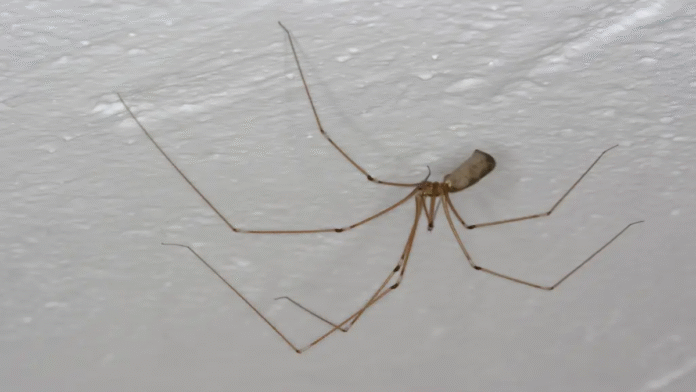
The trembling spider is one of the most delicate and filigree spider species you can find in your home. With its small body of only 8 to 10 millimetres and extremely long, thin legs that reach a wingspan of up to 7 centimetres, it looks very fragile. Its legs look almost like thin threads that sway slightly when it moves. Its coloration ranges from light brown to grey, and its delicate appearance makes it easy to overlook in dark corners.

Danger of confusion

Due to its long, thin legs, it is often confused with the weaver spider. However, unlike the latter, which is merely an arachnid, the trembling spider is a real spider and therefore has the ability to build webs.

Trembling spiders often build their webs in the corners of rooms, on ceilings or behind furniture. Their webs are rather irregular and not as elaborate as those of other spider species. In case of danger, the trembling spider shows a unique behavior: It begins to tremble strongly in its web, which is intended to confuse potential attackers. This trembling behavior also gives it its name. Trembling spiders are harmless and very useful, as they catch insects such as mosquitoes and flies and can even eat smaller spiders.

A typical house spider, which is often confused with the weaver spider: The trembling spider. Credit: IMAGO / blickwinkel

Habitat and distribution

This spider loves dry, warm and quiet places, which is why you will often find it in living rooms, basements or attics. It can nest unnoticed, especially in rooms that remain undisturbed for a long time, such as storage rooms or rarely used rooms. Due to their preference for dry conditions, they are less likely to be found in bathrooms or very damp cellars.

The trembling spider is widespread in Germany and can be found in almost every household. You will often only notice them when you discover their web or they give themselves away with a sudden movement. It is a frequent guest in German homes, especially in the colder months when it retreats indoors to escape the cold.

Preview image: ©IMAGO / blickwinkel

This article was partly created with machine support and carefully checked by the editorial team before publication.

Playing Free Online Slots Is Easy In Any Of The Casino Games

0

Top casino online free games are constantly offering you the hottest great bonuses and no deposits offers for new players only starting out from the very best online casinos. Some of those sites are going to have you enroll as a member for as little as free. But, there are many websites that are offering players boocasino

Best Online Fruit Machine for Real Money

0

Are you trying to find the best online slots genuine money? Look no more! In this guide, we will introduce you to a few of the leading online vending machine that provide awesome gameplay and the chance to win actual money incentives. Whether you are an experienced player or simply starting out, these slots make sure to supply you with hours of amusement

Choosing the Best Gambling Websites

0

Online gambling is any type of gambling conducted online. Including casinos, virtual poker and athletic events. However, the very first getslots casino no deposit bonus online gambling site to open to the general public, was live ticketing for the World Series of Poker in Las Vegas, in October 1994.

Now

Ideal Online Casinos That Accept Bitcoin

0

In recent years, the appeal of cryptocurrencies has been on the increase, and Bitcoin has emerged as the most popular and commonly accepted digital money. Consequently, lots of on the internet gambling 1xbet online establishments have begun accepting Bitcoin repayments, supplying gamers with a practical and secure

Laundry: Why your laundry can explode in the washing machine

0

An explosion in the washing machine sounds absurd, but it is actually possible. Incorrect handling of certain detergents or textiles can cause gases to develop that can become dangerous. Here you can find out what causes this phenomenon and how to avoid this danger.

Which cleaning agents are dangerous?

The greatest danger to the washing machine comes from solvent-based cleaners such as stain removers, turpentine, white spirit or decolorizers. These products contain substances that volatilize at high temperatures and release gases. If pre-treated clothing is put directly into the washing machine, these Vapors accumulate in the drum and form an explosive gas-air mixture.

According to Maria Beltran, press spokeswoman for Robert Bosch Haushaltsgeräte GmbH, this is where the real danger lies: “Gases that concentrate in a confined space in the washing drum can react with the smallest sparks from the electronics.” Normally, such Sparks are harmless, but if they come into contact with a high concentration of gas, this can lead to a detonation.

Explosion hazard in the washing machine: these are the causes

The closed washing drum offers little space for escaping gases. Vapors from textiles that have been pre-treated with solvents accumulate. During the washing process, the Friction of the drum and the motor ensure that tiny sparks are produced – normally not a problem. However, in combination with a large quantity of flammable gases, this can lead to a dangerous explosion.

This is particularly problematic with textiles that are heavily contaminated with stain removers or chemicals. However, even with seemingly minor residues, for example after cleaning grease or oil stains with white spirit, the corresponding gas formation can be sufficient to damage a washing machine.

In these cases, a washing machine can actually explode. Credit: GETTY – photoschmidt

How you can avoid the danger

If you want to pre-treat textiles with solvent-based cleaners, you should never put them straight into the washing machine afterwards. Instead, it is recommended that you first thorough hand wash with plenty of water to remove as much of the chemicals as possible. Only when the smell of solvents is no longer perceptible can you put the garments in the machine.

Alternatively, there are now special stain removers that without solvents and are significantly safer. Many brands offer ecological forms that are effective but harmless. Check the packaging to see if the product is solvent-free.

Another safety measure: wash such pre-treated textiles separatelyto reduce the risk of contaminating other items of laundry.

Explosion hazard even in the dryer

Incidentally, the danger does not end in the washing machine. Flammable gases can also have an explosive effect in the dryer. It is particularly critical when treated textiles are washed together with synthetic materials should be dried. Plastics and foams increase the risk of fire as they can melt at high temperatures. Anyone wishing to dry pre-treated clothing should therefore ensure that all residues have been thoroughly removed and that the textiles have been fully aired.


You may also be interested in these articles:


Safety first

Although an explosion in the washing machine remains an unusual exception, it still pays to be careful. When pretreating textiles, avoid using solvent-based detergents if possible or rinse the garments thoroughly before putting them in the machine. After all, your safety – and the service life of your washing machine – comes first.

Source: t-online

Watering houseplants correctly: The dangerous mistake with distilled water

0

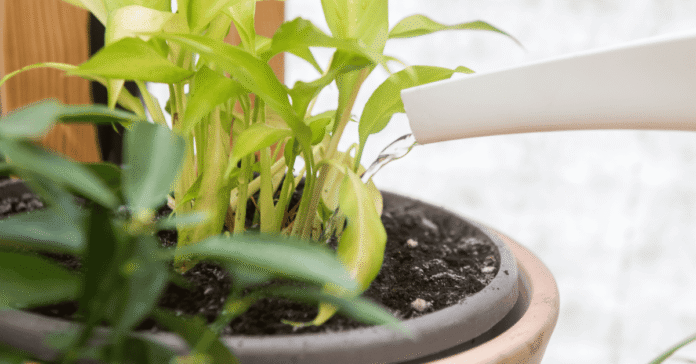
Houseplants beautify your home, improve the indoor climate and make you feel good. But you can go wrong when watering them – especially if you use distilled water. You may have heard that it is particularly pure. But is that really true? Is it good or bad to water houseplants with it? Find out here.

What is distilled water anyway?

Distilled water is completely free of salts, minerals and other substances and is particularly suitable for technical devices in the household, is found in several components and circuits in cars and is also used in medicine. But can you also water your plants with purified water?

It only contains H₂O – nothing else. That sounds perfect at first, because it doesn’t contain any substances that are potentially harmful to plants, such as lime. But beware: your green pets also need certain minerals that are found in normal tap water.

Distilled water is used in many areas. But is it also suitable as irrigation water? Credit: IMAGO / Steinach

Is it good for your houseplants?

If you water houseplants with distilled water, they won’t get any harmful substances, but they won’t get any nutrients either. This can be particularly problematic in the long term. Plants such as ferns or orchids, which are sensitive to lime, benefit from this for a short time. However, most other plants lack an important source of minerals.

When does it make sense to use it?

You can use distilled water if you mix it with rainwater or stale tap water. This prevents limescale deposits without sacrificing minerals. Alternatively, you can regularly add plant fertilizer if you don’t want to use alternative types of water.


You may also be interested in these articles:


Watering houseplants with distilled water – yes or no?

Watering your green friends with it is not fundamentally bad – but it is not ideal either. In the short term, it is suitable for limescale-sensitive species. In the long term, you should ensure a balanced water supply. It is best to mix it with tap water, add fertilizer or use rainwater directly. Your plants will thank you for it!

Source: My Homebook

Houseplants: How to get your amaryllis ready for the next winter

0

Your amaryllis has bloomed for weeks, but now the splendor is gone and the flowers are drooping? No need to throw your amaryllis away after flowering – after all, amaryllis are perennial plants! With a few clever tricks, you can look after them properly so that they bloom beautifully again next year.

1. remove faded flowers correctly

As soon as the flowers have wilted, cut off the flower stalk just above the bulb. But leave the leaves! They are important so that the plant can store energy for the next flowering.

2. now the growth phase begins

How to care for your amaryllis after flowering:

3. Amaryllis in summer

You can put the amaryllis outside from May. A semi-shady spot in the garden or on the balcony is ideal. Continue to water and fertilize until the leaves turn yellow in late summer.

4. initiate the dormant phase

Things get exciting from mid-August/early September:

  • Slowly stop watering and fertilizing.
  • Allow the leaves to wither and cut off wilted leaves.
  • Optional: Remove the onion from the pot and remove the soil.
  • Store the onion in a dry and cool place (8 – 15° C), preferably in the cellar. The vegetable compartment of the fridge is also a good place.
    But: Amaryllis is highly poisonous, just two milligrams is fatal! Make sure that you keep the bulb wrapped separately in newspaper so that it is never accidentally eaten or comes into contact with food.
During the dormant period, the amaryllis can be removed from the pot and set aside in a cool, dry place. Credit: IMAGO / Panthermedia

5. blooming splendor in winter

One month before the amaryllis is due to flower again, end the dormant phase. Plant it, water it and put it in a warm place. It will soon sprout again – and flowering will start all over again!

Special case: Waxed amaryllis bulb

If you have bought or been given a waxed amaryllis, don’t throw it away straight away! You can also keep them in the summer, but you’ll have to remove the wax first and get them to root again. Here’s how to do it:

  • First, remove the wax from the underside of the bulb by cutting and peeling it off with a knife, being very careful not to damage the bulb.
  • Then place the bulb in a narrow glass container, cover it with moss and spray the moss regularly with water! The moss should never dry out, so you can place a pine cone in the glass.
  • As soon as you can see that enough roots have formed, you can remove the remaining wax from the amaryllis.
  • To overwinter, plant it in a pot with fresh soil and continue with step two.

With these tricks and tips, your amaryllis will bloom anew every year – without much effort!

Share this ingenious trick with other plant fans!

Source: NDR, MDR
Preview image: ©Neils – stock.adobe.com