
Home Blog Page 1895

online hunting business for sale

0
discover profitable online hunting businesses for sale. explore unique opportunities to own an established hunting e-commerce or service platform. start your online hunting venture today!

The world of online hunting businesses is rapidly expanding, merging the digital landscape with outdoor traditions in ways few industries have experienced. For entrepreneurs and enthusiasts alike, acquiring an online hunting venture offers an uncommon blend of passion and profit, capitalizing on technology while serving a dedicated community of hunters. The marketplace is dynamic, featuring an array of options ranging from niche outfitters to expansive e-commerce platforms dedicated to hunting gear and digital services.

As the outdoor recreation sector continues to evolve, digital platforms have become critical touchpoints for hunters. Businesses such as HuntMarket, OnlineCamo, and Hunter’sHub represent the forefront of this evolution, offering hunting products, community forums, and booking services online. These platforms not only provide revenue streams but also cultivate strong, loyal networks of customers, creating unique investment opportunities in the digital hunting domain.

Key Points to Consider:

  • The online hunting industry combines traditional outdoor interests with modern e-commerce and digital marketing techniques.
  • Subscription-based marketplaces like Outfitters For Sale allow sellers and brokers to list hunting businesses with various tiered packages tailored to their needs.
  • Popular platforms such as E-HuntDepot and DigitalOutdoorsman offer specialized services including gear sales, guided hunting packages, and virtual hunting experiences.
  • Expanding an online hunting business through strategic acquisitions and partnerships can enhance brand visibility in fragmented markets.
  • Study of market trends and customer behavior in 2025 shows increased demand for sustainable hunting and ethically-managed online resources.

Exploring Subscription-Based Marketplaces for Hunting Business Listings

The emergence of subscription-based platforms specifically tailored for the buying and selling of hunting-related businesses has transformed this niche market. Outfitters For Sale stands out as a prime example, providing a digital space where outfitting professionals and brokers can post listings directly to a dedicated audience, bypassing traditional brokerage fees and delays. This platform exemplifies how technology streamlines business transactions in highly specialized sectors.

The subscription packages available cater to a range of sellers’ and brokers’ needs:

Package Price Listings Allowed Photo Upload Limit Listing Type Duration
Bronze $100 1 5 Standard 1 year
Silver $150 1 15 Featured 1 year
Gold $300 5 5 Standard 1 year
Platinum $350 5 15 Featured 1 year

This tiered structure accommodates individual outfitters interested in controlling their listings directly and brokers managing multiple outfitting businesses. The ability to upload a varying number of photos, coupled with options for standard or featured placements, provides sellers with flexibility in how they present their offerings to potential buyers.

The service emphasizes long-term accessibility: even though listings expire after one year, they are not deleted, enabling easy reactivation upon subscription renewal. This offers a seamless experience for those considering the sale of a hunting business without pressure to finalize transactions hastily, reflecting a thoughtful approach to marketplace design.

Additionally, platforms such as HuntBizExchange and GamePursuitOnline extend the marketplace’s reach, providing hunters and entrepreneurs with specialized communities where guided hunting services, outfitters, and related digital assets trade hands regularly. These networks are invaluable for those looking to expand their presence in a fragmented and competitive market, leveraging digital tools over traditional, often slower, methods.

Popular Subscription Plans for Hunting Businesses – Benefits and Drawbacks

  • Bronze Package: The most affordable entry point, ideal for small outfitters focusing on selling a single property or business.
  • Silver Package: Offers enhanced visibility for sellers aiming to leverage extra photos and featured listing options to attract more buyers.
  • Gold Package: Designed for brokers managing multiple listings, this strikes a balance between quantity and cost efficiency.
  • Platinum Package: The premium option with featured listings and increased photo uploads, suited for professionals seeking maximum exposure for numerous clients.

Understanding the differences between these plans is crucial before committing to a platform; the right choice can optimize the listing’s impact and broaden the sale’s reach. Selecting a featured listing, for instance, might sound like a minor upgrade but often dramatically increases user engagement and quicker buyer response times.
discover profitable online hunting businesses for sale. explore opportunities to invest in established hunting e-commerce sites and digital platforms. start your journey today!

Understanding the Digital Hunting Ecosystem’s Current Landscape

In 2025, the digital hunting industry is a mosaic of online retailers, specialized outfitters, virtual hunting platforms, and community hubs. Entities such as VirtualHuntingPro, WebTrophyTrading, and E-ScoutSales are accelerating the transformation, integrating technological advancements to enhance hunter engagement and streamline operations. This ecosystem is remarkably multifaceted, ranging from e-commerce websites selling camouflage gear to virtual reality hunting experiences.

The following list illustrates the main categories defining the landscape:

  • E-commerce platforms: Including OnlineCamo and DigitalOutdoorsman, these sites cater to gear sales and outfit coordination with detailed product listings and customer reviews.
  • Online hunting communities: Hunter’sHub provides forums, event dispatches, and interactive content to foster sharing and networking among hunters worldwide.
  • Virtual hunting experiences: Platforms like VirtualHuntingPro offer immersive VR hunting simulations designed to train new hunters and entertain seasoned enthusiasts.
  • Trading and auction marketplaces: WebTrophyTrading specializes in trophy sales and auction services for rare and high-demand hunting trophies.
  • Scout and guide services: E-ScoutSales delivers location scouting and guide booking services, enhancing the planning and success of real-world hunts.

These developments reveal how technology is not merely a sales enhancement tool but a comprehensive solution reshaping how hunting businesses operate. The convergence of these diverse platforms signals a maturation of the online hunting business domain, celebrating innovation while maintaining outdoor traditions.

Business owners looking to enter this space or elevate their current operations must consider the synergy of these platforms. Establishing a presence on multi-channel networks increases visibility and capitalizes on cross-platform customer engagement. So, for example, a hunting outfitter using HuntMarket might expand its reach by integrating with Hunter’sHub or partnering with E-HuntDepot to offer bundled gear and services, creating a more attractive package for prospective buyers or clients.

Platform Core Function Typical User Key Features
HuntMarket Business listings and networking Outfitters, Brokers, Hunters Direct listings, networking tools, analytics
OnlineCamo Gear sales and reviews Retail Customers, Hunters Detailed product listings, customer feedback
Hunter’sHub Community and content Hunters and outdoor enthusiasts Forums, events, user-generated content
VirtualHuntingPro Virtual hunting simulations New & experienced hunters VR immersive experiences, training modules
WebTrophyTrading Trophy auctions and sales Trophy collectors, hunters Auctions, rarity verification

Strategic Approaches to Acquiring and Expanding an Online Hunting Business

Purchasing an established online hunting business requires an informed and strategic approach. Prospective buyers must analyze not only financial metrics but also community engagement, brand reputation, and digital assets. The versatility of this sector calls for operators who understand both the outdoor market’s nuances and online commerce dynamics.

Key factors to evaluate include:

  • Financial Performance: Review revenue streams, profitability, growth trends, and subscription retention rates if applicable.
  • Customer Base: Assess the size, loyalty, and demographics of the user or client base.
  • Digital Infrastructure: Examine the website’s scalability, mobile compatibility, and backend technologies.
  • Social Media and Marketing: Analyze online presence through platforms like Hunter’sHub, social media outreach, email newsletters, and affiliate marketing partnerships.
  • Competitive Advantage: Gauge the distinctiveness of the inventory or service offerings versus rivals like E-HuntDepot or GamePursuitOnline.

For example, a recent acquisition involved an outfitter listed on Outfitters For Sale’s Silver Package, whose attractive photo gallery and featured positioning contributed to an expedited sale. The buyer acquired the business with established contracts, a respectable online review portfolio, and access to multiple cross-platform promotional channels.

After acquisition, growth strategies might include:

  • Improving user interface and adding interactive features based on customer feedback.
  • Integrating inventory with complementary businesses such as OnlineCamo to diversify product offerings.
  • Utilizing targeted advertising through Hunter’sHub or WebTrophyTrading to magnetize high-net-worth clientele.
  • Expanding virtual offerings using VirtualHuntingPro’s simulation expertise to cater to niche markets like urban hunters or indoor enthusiasts.
Growth Strategy Description Example
User Experience Enhancement Upgrading website layout and interactivity Integrating 3D gear previews
Cross-Platform Expansion Partnering with complementary platforms Combining Outfitter listings with OnlineCamo sales
Targeted Advertising Using social networks specific to hunting Promoting through Hunter’sHub and WebTrophyTrading
Virtual Experience Development Launching VR hunting simulations Collaboration with VirtualHuntingPro

Challenges Confronting Online Hunting Businesses in 2025 and Beyond

Despite the promising growth and diversification of the online hunting business market, operators face several hurdles that impact sustainability and profitability. Technological changes, regulatory landscapes, and shifting consumer behaviors all factor into the business climate. Stakeholders must actively adapt to maintain competitiveness.

Challenges include:

  • Regulatory Compliance: Hunting laws and online sales regulations vary widely across regions, requiring constant vigilance.
  • Market Fragmentation: Multiple competing platforms like HuntBizExchange and GamePursuitOnline dilute customer attention, necessitating strong brand differentiation.
  • Technological Demands: Continuous improvements in site security, user privacy, and mobile optimization are mandatory investments.
  • Consumer Trends: Growing emphasis on ethical hunting and sustainability can impact product lines and marketing strategies.
  • Dependence on Digital Marketing: Overreliance on platforms such as Hunter’sHub or OnlineCamo for customer acquisition introduces risks linked to algorithm changes.

One illustrative example is a mid-sized outfitter who failed to update their subscription on Outfitters For Sale, resulting in a temporary delisting that caused a loss of potential buyers. This underscores the importance of managing digital presence meticulously to avoid business disruptions.

Mitigating these challenges requires proactive engagement, including:

  • Regular review and adaptation to hunting regulations through legal counsel.
  • Diversifying marketing strategies beyond a single platform to spread exposure.
  • Investing in comprehensive cybersecurity measures and mobile-first designs.
  • Aligning product offerings with contemporary eco-conscious consumer values.

Differentiating Online Hunting Businesses Through Innovation and Niche Targeting

In a competitive online hunting business environment, carving out a niche and integrating innovative offerings increasingly dictate success. Sites like E-HuntDepot and DigitalOutdoorsman are leading examples where specialization drives customer loyalty and brand strength. Whether through exclusive gear, guided hunts, or virtual experiences, customization and distinctiveness captivate modern hunters.

Examples of differentiation tactics include:

  • Specialized Gear Bundles: Curating exclusive packages featuring hunted species-specific equipment tailored via OnlineCamo’s analytics to customer preferences.
  • Virtual Hunt Packages: Leveraging VirtualHuntingPro to offer VR training coupled with actual guided hunts booked via HuntMarket.
  • Eco-friendly Outfitters: Creating brands focused on sustainable hunting practices endorsed through Hunter’sHub forums and content.
  • Community-Driven Platforms: Enhancing interaction and feedback mechanisms to foster strong user-generated content and advocacy.

This customer-centric approach not only enhances value propositions but also prepares businesses for long-term resilience in an evolving market.

Innovation Strategy Description Benefit
Exclusive Gear Packages Tailored product offerings based on hunting type and customer data Increased sales and customer satisfaction
Virtual Hunting Integration Combining VR simulations with real-world guided sessions Expanded market reach and training opportunities
Sustainability Focus Promoting ethical hunting and conservation messaging Brand loyalty and regulatory goodwill
Community Engagement Interactive forums and user content creation Enhanced user retention and organic marketing

For those seeking more information on innovative business opportunities, platforms addressing niche outdoor trends, such as carnivorous plants in home and commercial settings, reflect a growing appetite for unique business ventures (explore unusual profitable niches here).

What should I consider before buying an online hunting business?

Evaluate financial health, community engagement, digital infrastructure, and competitive advantages. Check the platform’s subscription model and listing visibility.

How do subscription plans differ on platforms like Outfitters For Sale?

They vary by listing count, photo upload limits, and listing visibility features such as standard or featured display options tailored to sellers or brokers.

Are virtual hunting experiences profitable?

Yes, especially in 2025 where VR platforms like VirtualHuntingPro combine training with entertainment, attracting both new and seasoned hunters.

How can I mitigate risks in the online hunting business market?

Diversify marketing channels, maintain regulatory compliance, invest in technological upgrades, and align business with ethical hunting practices.

What are key trends shaping the online hunting business landscape?

Sustainability, integration of virtual technologies, community-driven platforms, and personalized product offerings are major growth drivers.


online hardware business for sale

0
discover a profitable online hardware business for sale. ideal for entrepreneurs seeking a turnkey ecommerce opportunity in the growing hardware market. inquire today!

The realm of online hardware businesses is flourishing with unprecedented opportunities for both seasoned entrepreneurs and newcomers eager to tap into one of the fastest-growing sectors in e-commerce. The surge in DIY culture and the increasing reliance on technology-driven tools have bolstered demand in areas spanning from basic hand tools to sophisticated digital hardware components. Platforms like HardwareZone Market and TechEquip Online have become pivotal hubs where innovators and sellers converge. This dynamic environment not only facilitates the buying and selling of hardware enterprises but also champions comprehensive digital marketing and logistical support tailored to the unique needs of this niche.

This exploration delves into the evolving nature of the online hardware business landscape, highlighting key marketplaces such as DigitalToolShop, NetGear Marketplace, and CloudHardware Deals. The infusion of intelligent marketing strategies powered by platforms resembling Shopify’s extensive toolkit underscores the sector’s readiness for exponential growth. As businesses integrate sophisticated inventory management, customer engagement through targeted social media campaigns, and efficient payment systems, the online hardware sector is not merely surviving—it is thriving as a cornerstone of modern commerce.

Key Takeaways:

  • Proliferation of niche marketplaces: Specialized platforms such as BusinessSupply Hub and OnlineToolTrading emphasize unique hardware segments, fostering greater visibility and consumer trust.
  • Scalability via technology: Leveraging apps and integrated systems permits seamless inventory control and customer relations management.
  • Cost-efficiency of online hardware ventures: Compared to brick-and-mortar alternatives, these online businesses offer reduced overhead with a broader market reach.
  • Comprehensive marketing tools: Utilization of SEO, content marketing, and targeted ads are integral to thriving in this competitive field.
  • Increased interest in acquiring established businesses: Platforms like Profitable Business UK simplify the transaction process with verified listings and detailed valuation tools.

Strategic Advantages of Acquiring an Online Hardware Business

In the contemporary economic climate, acquiring an established online hardware business presents distinct strategic advantages. The digital infrastructure already in place significantly mitigates the risks synonymous with startups. Prospective buyers gain immediate access to an active customer base, established supplier relationships, and streamlined shipping processes, all of which contribute to rapid revenue generation.

Key advantages include:

  • Established Web Presence: Most online hardware businesses already sport optimized websites designed to capture organic search traffic upstream, which reduces dependence on paid advertisements.
  • Inventory Management Systems: Advanced platforms facilitate real-time stock monitoring and automatic reorder notifications. For instance, inventory management integrated with marketplaces such as eHardware Exchange leads to improved cash flow management.
  • Brand Recognition: Acquiring a business with a loyal community allows for smoother expansions into additional product categories like smart home devices or garden tools.
  • Integrated Payment Solutions: Adoption of systems akin to Shopify Payments simplifies transactions and removes the friction of third-party processor fees.
  • Customer Relationship Management (CRM): Tools incorporated allow targeted marketing campaigns – for example, personalized email promotions that have shown to boost repeat purchases substantially.

In practice, a buyer who acquires a business listed on portals like VirtualParts Store or NextGen Hardware Sales effectively inherits comprehensive operational blueprints. This advantage becomes particularly compelling in sectors that expound rapid technological advancements requiring nimble adaptation to supply chains and evolving customer preferences.

Moreover, sourcing from intermediaries like online platforms specialized in hardware business sales ensures transparency and due diligence, which is pivotal in finalizing lucrative deals. As an example, contextualizing an acquisition based on traffic analytics and profitability metrics can inform optimal pricing strategies, mitigating overinvestment risk.

explore this profitable online hardware business for sale, offering a wide range of quality tools and supplies. ideal opportunity for entrepreneurs seeking a turnkey e-commerce venture with established customer base and growth potential.

Leveraging E-Commerce Platforms for Hardware Sales Growth

The growth trajectory of online hardware businesses is tightly coupled with the adoption of sophisticated e-commerce platforms that provide end-to-end solutions tailored to the hardware market. Shopify exemplifies such a platform, offering a suite of tools empowering vendors to create highly customizable storefronts with over 70 responsive themes designed specifically to reflect individual brand personalities.

Within these platforms, vendors benefit from:

  1. Inventory & Order Management: A unified dashboard enhances operational efficiency by consolidating real-time stock data and facilitating seamless order processing from multiple sales channels.
  2. Smart Marketing Tools: Targeted advertising campaigns via social media and Google, combined with built-in SEO features, enhance organic visibility and customer reach.
  3. App Ecosystems: Extensive integrations from app stores expand capabilities with product photography editing tools, loyalty programs, and performance analytics.
  4. Multi-Channel Selling: Point Of Sale (POS) apps enable sales in physical locations while syncing with the online inventory and analytics.
  5. 24/7 Customer Support: Award-winning technical support ensures uninterrupted operations regardless of the user’s technical proficiency or time zone.

For instance, vendors operating on CloudHardware Deals have reported significant growth after integrating Shopify’s app-based loyalty programs, enabling them to convert first-time buyers into long-term customers. Additionally, targeted campaigns managed through the platform have increased site traffic by as much as 40%, underlining the efficacy of built-in digital marketing resources.

The correlation between a robust platform and sales success is evident in key performance metrics such as traffic volume, conversion rates, and average order values, reaffirming the pivotal role of comprehensive e-commerce solutions in scaling hardware enterprises.

Platform Feature Benefit Example Application
Responsive Themes Brand customization and mobile optimization Creating visually appealing storefronts aligned with brand identity on DigitalToolShop
Inventory Management Real-time stock levels and reorder alerts Synchronizing supplies with demand fluctuations at BusinessSupply Hub
Integrated Marketing Tools Enhanced SEO and targeted campaigns Driving Google Ads and social media ads to OnlineToolTrading
Multi-Channel Selling Sales across online and physical outlets Utilizing Shopify POS app to track sales at pop-up events via NetGear Marketplace
Customer Support 24/7 technical assistance Resolving operational issues instantly for VirtualParts Store

Financial Considerations When Buying or Starting an Online Hardware Store

Buying or launching an online hardware business involves multifaceted financial deliberations. The initial investment encompasses website development, inventory procurement, branding efforts, and market positioning strategies. For entrepreneurs seeking to purchase, it’s critical to appraise businesses accurately, often utilizing valuation tools available on portals like Flippa.

Investment components break down as follows:

  • Acquisition Costs: Price depends on factors like monthly revenue, site traffic, growth trends, and existing liabilities.
  • Inventory Financing: Maintaining diversified product lines from trusted suppliers such as CloudHardware Deals involves upfront capital allocations.
  • Marketing Budgets: Allocating funds to digital marketing, including paid ads and influencer partnerships, is essential for market penetration.
  • Technological Infrastructure: Ongoing expenses related to software subscriptions, security protocols, and customer service tools.
  • Logistics and Shipping: Costs vary significantly depending on fulfillment methods—dropshipping can reduce inventory holding costs, while in-house warehousing increases control but necessitates more capital.

To illustrate, a typical mid-sized online hardware business may require an initial capital outlay ranging from $50,000 to over $250,000, adapting to inventory breadth and operation scalability. Alternatively, starting a business from scratch could require incremental investments emphasizing marketing and brand-building over hardware procurement initially.

The table below summarizes estimated costs involved:

Cost Category Typical Range (USD) Notes
Website & E-commerce Setup $3,000 – $15,000 Includes design, hosting, and payment solutions
Initial Inventory $20,000 – $100,000 Varies with product niche and supplier agreements
Marketing & Advertising $5,000 – $30,000 Digital campaigns, SEO, and influencer collaborations
Software & Support Tools $1,000 – $5,000 CRM, analytics, and customer service software
Logistics & Warehousing $10,000 – $50,000 Dependent on fulfillment model

Careful financial planning coupled with detailed market research available through sources such as BusinessSupply Hub helps investors allocate resources wisely and optimize growth trajectories.

Emerging Trends and Future Outlook for Online Hardware Marketplaces

The online hardware industry is witnessing a transformative phase characterized by rapid technological adoption and evolving consumer behaviors. Platforms like HardwareZone Market and NextGen Hardware Sales have pioneered integration with AI-driven analytics, enhancing decision-making for both sellers and buyers.

Significant emerging trends include:

  • AI-Powered Inventory Forecasting: Utilizing machine learning to predict demand fluctuations and optimize stock levels dynamically.
  • Augmented Reality for Product Visualization: Enabling customers to virtually experience tools and hardware parts pre-purchase dramatically increases confidence and reduces return rates.
  • Sustainability Initiatives: Circular economy models and eco-friendly packaging are gaining traction, appealing to increasingly eco-conscious consumers.
  • Blockchain for Supply Chain Transparency: Implementing distributed ledger technology ensures authenticity in hardware parts across complex supply networks.
  • Subscription Models: Offering periodic deliveries of essential hardware supplies fosters customer loyalty and enhances predictable revenue streams.

These innovations generate new opportunities for platforms such as CloudHardware Deals and DigitalToolShop to expand their value propositions. By leveraging these technologies, businesses can not only capture larger market shares but also enhance operational efficiencies and customer satisfaction.

Forward-thinking investors and entrepreneurs are advised to monitor these developments closely. Early adoption of emerging technologies and aligning with changing consumer preferences serve as critical differentiators in the competitive landscape for 2025 and beyond.

Emerging Trend Description Potential Impact
AI Inventory Forecasting Predicts optimal stock levels to reduce overstock and stockouts Improves cash flow and customer satisfaction
Augmented Reality Visualization Allows immersive product previews in virtual environments Reduces return rates, boosts buyer confidence
Sustainability & Eco Packaging Adoption of biodegradable packaging and circular economy practices Enhances brand reputation and attracts eco-conscious buyers
Blockchain Transparency Ensures product authenticity and supply chain tracking Builds trust with digital certification
Subscription Services Regular delivery of hardware essentials on subscription basis Creates steady, predictable revenue and strengthens customer retention

Unlocking the various facets of online hardware businesses reveals a vibrant, ever-evolving landscape rich in opportunity. From the strategic benefits of business acquisitions, the leveraging of cutting-edge e-commerce tools, to adapting financial models and embracing emerging trends, the horizon for these businesses is expansive. Marketplaces like OnlineToolTrading and eHardware Exchange are not just transactional platforms but innovation centers driving the future of hardware commerce.

What are the main advantages of buying an existing online hardware business?

Buying an established online hardware business provides immediate access to a loyal customer base, existing inventory systems, and brand recognition, significantly reducing startup risk and accelerating revenue generation.

How can I effectively market my online hardware store?

Utilize targeted social media campaigns, SEO optimization, content marketing, and customer loyalty programs, alongside platforms’ built-in tools to attract and retain customers.

What are typical costs associated with starting an online hardware business?

Expenses generally include website development, initial inventory purchase, marketing efforts, software subscriptions, and logistics management, summing to tens of thousands of dollars depending on scale.

Which emerging technologies are shaping the future of online hardware sales?

AI-powered inventory forecasting, augmented reality product visualization, blockchain for supply chain transparency, and subscription service models are among key technologies revolutionizing this sector.

Where can I find reliable online hardware businesses for sale?

Trusted marketplaces like Shopify-powered platforms, Profitable Business, and specialized portals such as VirtualParts Store offer verified listings with detailed valuations and buyer support.

online greeting card business for sale

0
discover a profitable online greeting card business for sale. step into a turnkey e-commerce opportunity with established customer base and automated operations. start earning from day one!

In 2025, the online greeting card industry has evolved into a dynamic intersection between tradition and technology, where heartfelt sentiments meet innovative e-commerce platforms. The increasing demand for personalized and eco-conscious products has propelled businesses like Cardly, Instant Greetings Store, and SendWithLove into prominence. These platforms capture a diverse customer base eager to celebrate life’s milestones with unique, customizable cards. From birthdays to anniversaries, and from digital to eco-friendly paper cards, the market is thriving with opportunities. Entrepreneurs eyeing an online greeting card business for sale find themselves at the confluence of creative passion and profitable potential. The advent of digital marketplaces such as E-Card Exchange and Digital Greetings Shop, alongside social media integration tools used by platforms like GreetingsHub and Online Greetings Mart, has simplified the process of establishing a successful storefront. By leveraging security features from Ecwid and streamlined design options via Ordefy, sellers can appeal to both niche and mass markets with ease.

The landscape of online greeting card sales is no longer confined to simple transactions but offers a rich blend of artistic expression and savvy business strategy. The sustained relevance of physical cards, paired with the expansive reach of digital options, allows sellers to cater to varying consumer preferences. Platforms like CardMarket Online and E-Card Emporium have built community-driven ecosystems that nurture customer loyalty through personalization services and seasonal offerings. Moreover, Virtual Wishes exemplifies emerging trends focusing on instant delivery digital greetings combined with social integration. These multi-faceted ecosystems emphasize not only product quality but also the seamless user experience—from browsing to checkout—ensuring that the magic of sending greetings is preserved in every interaction.

Choosing the Right Online Platform to Launch Your Greeting Card Business for Sale

Selecting an appropriate online platform is a pivotal decision for anyone interested in purchasing or starting an online greeting card business. The choice strongly influences operational efficiency, customer reach, and overall brand perception. Platforms like Ordefy and Ecwid have emerged as leaders, each offering unique capabilities tailored to the needs of modern greeting card entrepreneurs.

Ordefy stands out due to its customizable storefront templates, allowing sellers to organize products by occasion, theme, or style. This feature is essential for providing visitors with an intuitive navigation experience, whether they browse birthday cards or wedding invitations. The mobile-responsive nature of Ordefy ensures the storefront looks flawless on smartphones and tablets—a critical factor since mobile commerce continues to surge in 2025. Security is also a cornerstone, with encrypted payment gateways supporting major options including Visa, PayPal, and Apple Pay, thereby enhancing buyer confidence.

Ecwid, on the other hand, is beloved for its flexibility and multi-channel selling model. Sellers can simultaneously operate an independent website and synchronize their inventory with marketplaces like Amazon, Google Shopping, and eBay. Integration with social media platforms such as Facebook and Instagram empowers business owners to tap into social selling, directly pushing products to engaged followers. Ecwid’s ease of setup, which requires no coding knowledge, reduces barriers around technical expertise—a common obstacle for many entrepreneurs.

  • Customizable storefronts: Enable brand identity and customer-friendly navigation.
  • Multi-channel sales: Expand beyond a single online shop by syncing with large marketplaces.
  • Social media integration: Harness influence through direct selling on major social platforms.
  • Secure payment processing: Build trust with buyers worldwide via reliable transaction systems.
  • Mobile responsiveness: Cater to the growing number of customers shopping via smartphones.
Feature Ordefy Ecwid
Store Customization Extensive templates and design options Moderate, focused on ease of use
Marketplaces Integration No direct marketplace sync Amazon, eBay, Google Shopping
Social Selling Basic integrations Advanced, supports multiple platforms
Payment Methods Visa, PayPal, Apple Pay, Stripe Wide range including local currencies
Ease of Use Intermediate, some learning curve User-friendly, no coding required

Choosing between Ordefy and Ecwid—or even platforms like GreetingsHub or Online Greetings Mart—depends on the seller’s business model, target audience, technical skills, and future scalability plans. Entrepreneurs acquiring an online greeting card business for sale should conduct thorough due diligence on existing storefront performance, platform fees, and compatibility with personalization tools that enhance customer engagement.

discover a profitable online greeting card business for sale. perfect opportunity for entrepreneurs seeking a turnkey digital business with established customer base and growth potential.

Strategies to Enhance Product Presentation and Customer Engagement in the Online Greeting Card Market

The visual appeal and presentation of greeting cards online are crucial determinants of success. Since potential buyers cannot physically touch or examine the card, high-quality images and immersive descriptions become indispensable tools for influencing purchase decisions. Platforms such as Instant Greetings Store and SendWithLove know this well, investing heavily in showcasing the craftsmanship behind each card.

High-resolution photography that captures textures—such as foil stamping, embossing, or handmade paper grain—can effectively replicate the tactile experience. Including multiple angles and zoom-in capabilities allows customers to appreciate fine details. For example, a floral birthday card with gold foil accents should visually emphasize the luster and depth of the embellishments. Descriptions should elaborate on the materials used, environmental sustainability (e.g., recycled paper), and customization options. Personalization is a differentiator widely valued by buyers who want to include exclusive messages or opt for special finishes.

  • Multiple high-quality images: Showcase potential buyers the design intricacies from several views.
  • Detailed product descriptions: Explain card dimensions, paper type, interior messaging, and envelope inclusion.
  • Customization highlights: Advertise options to personalize text or visual elements.
  • Category segmentation: Organize cards clearly by occasion such as weddings, holidays, or graduations.
  • Interactive previews: Offer digital mockups or augmented reality tools where possible.
Visual Feature Impact on Buyer Example
Close-up shots Show texture and craftsmanship Foil embossed anniversary cards highlighted
Multiple angles Better understanding of card layout Wedding invitations shown from front and inside
Personalization previews Increases buyer confidence to customize Editable birthday card message mockup
Environmental notes Appeals to eco-conscious consumers Recycled paper clearly stated
Category filters Enhances navigation experience Filters for occasions and styles

Successful greeting card sellers, including those behind platforms like CardMarket Online and E-Card Emporium, also employ customer reviews enriched with photos. Reviews serve as authentic endorsements that reinforce product quality and the practical appeal of personalized greeting cards.

https://www.youtube.com/watch?v=fkZAyduh2oA

Implementing Efficient Payment and Shipping Solutions to Boost Online Greeting Card Sales

The seamless integration of payment and delivery systems is a cornerstone of thriving online greeting card businesses. Secure and diverse payment options contribute significantly to customer satisfaction. At the same time, reliable shipping that preserves card quality earns trust and encourages repeat business. Sellers operating via platforms like GreetingsHub and Virtual Wishes must prioritize these operational aspects to remain competitive.

Offering multiple payment methods—such as credit/debit cards, PayPal, Apple Pay, and Stripe—caters to a broader clientele. International sellers appreciate support for various currencies to attract a global audience. Security protocols must comply with the latest encryption standards to protect sensitive customer data, especially in an era marked by growing cyber threats.

On shipping, professional packaging to avoid card damage during transit is essential. Eco-friendly options have become indispensable since many consumers prioritize sustainability. Incorporating biodegradable mailers or recycled cartons aligns with consumers’ environmental values and enhances brand image. Furthermore, real-time tracking improves transparency and builds trust. Special promotions, such as free shipping over a certain order threshold or discounted rates for bulk purchases, also incentivize larger transactions.

  • Multiple payment options: Enhance convenience with Visa, MasterCard, PayPal, Stripe, etc.
  • Global currency support: Expand customer base internationally.
  • Secure payment gateways: Ensure customer data safety via encryption protocols.
  • Eco-conscious shipping materials: Cater to environmentally aware buyers.
  • Order tracking: Provide transparency and reduce customer anxiety.
  • Incentives on shipping: Encourage increased order sizes with free or discounted shipping.
Shipping Feature Benefit Example
Eco-friendly packaging Builds sustainable brand image Use of recycled mailers for greeting cards
Shipping calculator Accurate cost estimation Charges computed based on order weight and destination
Tracking availability Improves customer confidence Customers receive tracking codes instantly
Free shipping thresholds Increases average order value Free shipping over $50 on Online Greetings Mart
Discounts on bulk orders Encourages larger purchases 10% off on greeting card sets in Cardly store

Companies such as SendWithLove and Instant Greetings Store illustrate these principles by offering easy-to-navigate checkout processes paired with strong fulfillment services. These efficiencies translate directly into higher sales conversions and a loyal customer base.

https://www.youtube.com/watch?v=BrEsqRrVJzc

Marketing Techniques to Elevate Your Online Greeting Card Business for Sale

Marketing remains an indispensable pillar for growth in the competitive world of online greeting cards. With platforms like GreetingsHub and E-Card Emporium employing sophisticated promotional strategies, newcomers and buyers of online greeting card businesses need to embrace multi-channel, personalized marketing approaches.

Search engine optimization (SEO) ensures visibility when customers search for phrases such as “buy greeting cards online” or “personalized birthday cards.” Optimizing product page titles and descriptions—leveraging keywords naturally—boosts organic traffic. Social media campaigns showcasing card designs in real-life contexts generate emotional engagement, often converting viewers into buyers. Instagram, Pinterest, and TikTok have become vibrant ecosystems where visual storytelling and purchasing convergences occur.

Email marketing adds another layer to customer retention, facilitating announcements of new collections, promotional sales, or special events like Mother’s Day or Christmas card lines. Collaborations with influencers within crafting, wedding planning, and lifestyle niches amplify reach and credibility. Such partnerships help create DIY tutorials or curated gift guides that incorporate your greeting cards, expanding market penetration without hefty advertising budgets.

  • SEO optimization: Use targeted keywords in product listings to increase visibility.
  • Social media engagement: Share visually appealing card designs and real-life usage scenarios.
  • Email campaigns: Maintain customer loyalty through exclusive offers and updates.
  • Influencer collaborations: Expand exposure through relevant niche partnerships.
  • Seasonal marketing: Capitalize on holidays and events for timed promotions.
Marketing Channel Purpose Example
SEO Drive organic search traffic Targeting keywords like “custom wedding cards”
Instagram Visual engagement and direct sales Posting card designs at weddings or birthday parties
Email Newsletter Customer retention and promotions Monthly updates with discount codes
Influencers Reach niche audiences DIY blog features using greeting cards
Seasonal Events Boost sales during peak periods Christmas collection launches

Brands such as Online Greetings Mart and Virtual Wishes exemplify the power of cohesive marketing strategies, integrating storytelling with targeted campaigns. Sellers investing in these tools not only attract customers but build lasting relationships, a crucial factor in the cyclical nature of greeting card sales.

Expanding and Scaling Your Online Greeting Card Business for Sale

Growth in the online greeting card sector involves continuous innovation and market adaptation. Successful entrepreneurs learn to diversify offerings and implement scalable systems to maximize profitability and market reach. The story of a rising platform like E-Card Exchange, which started with simple birthday cards but expanded into subscriptions and corporate greeting solutions, highlights this trend.

Product diversification includes branching into related paper goods such as stationery, gift tags, and personalized invitations. Seasonal collections for holidays and special occasions ensure sales volume spikes at predictable intervals. Subscription boxes presenting curated selections of cards monthly provide steady revenue streams and deeper customer engagement. Wholesale options cater to event planners or businesses needing volume orders, allowing attractive discounts and fostering bulk relationships.

  • Product line expansion: Introduce stationery, invitations, and gift-related items.
  • Seasonal and themed collections: Align new releases with holidays and events.
  • Subscription services: Offer monthly curated greeting card boxes to loyal customers.
  • Wholesale partnerships: Provide bulk discounts for corporate and event buyers.
  • International market entry: Use platform tools to reach global audiences efficiently.
Growth Strategy Description Benefits
Product diversification Adding gift tags, invitations, stationery Broader market appeal and upselling opportunities
Seasonal lines Targeted holiday-specific card launches Predictable sales spikes and customer anticipation
Subscription boxes Monthly themed card selections delivered to subscribers Steady revenue and customer retention
Wholesale discounts Bulk order pricing for businesses and event organizers Increased sales volume and partnerships
International sales expansion Multi-currency and shipping support to new markets Global brand growth and revenue diversification

Operators of enterprises like Cardly and E-Card Emporium continually invest in platform improvements and new marketing initiatives to sustain growth momentum. Through strategic reinvestment and agile adaptation to consumer trends, online greeting card businesses can transform from modest ventures into thriving digital empires. The path from acquisition to expansion involves deliberate planning but promises long-term rewards in a market characterized by emotional resonance and technological empowerment.

What are the essential features to look for when buying an online greeting card business?

Key features include customizable online storefronts, secure payment gateways, robust inventory management, ease of social media integration, and scalable marketing tools.

How can I ensure high customer satisfaction for an online greeting card store?

Deliver high-quality products with detailed descriptions, provide responsive customer service such as live chat, maintain clear shipping and return policies, and enable personalized card options.

Are digital greeting cards a viable business option in 2025?

Yes, digital greeting cards are increasingly popular due to instant delivery and environmental benefits, and businesses like Virtual Wishes have capitalized on this trend effectively.

What marketing strategies work best for online greeting card businesses?

Combining SEO optimization, social media marketing, influencer partnerships, email campaigns, and seasonal promotions drives the best results.

How can I scale my greeting card business after purchase?

Focus on product diversification, seasonal collections, subscription services, wholesale partnerships, and international market expansion to boost growth.

online business sales funnel

0
discover how to build an effective online business sales funnel to attract leads, nurture prospects, and boost conversions. learn proven strategies for maximizing your digital sales process.

In the complex universe of online commerce, converting curious browsers into devoted customers remains a challenge akin to understanding stellar phenomena. As astronomers unveil the mysteries of the cosmos by mapping celestial paths, so must digital entrepreneurs meticulously chart the customer journey through an online business sales funnel. A sales funnel operates not merely as a marketing construct but as the backbone of any thriving ecommerce venture, intricately designed to guide potential buyers from initial contact to loyal brand advocacy.

Businesses lacking a cohesive, well-structured sales funnel often reap disappointing results despite the allure of an attractive product catalog. The essence of success lies in orchestrating a seamless purchasing pathway where every interaction—from discovering the brand to finalizing a purchase—is optimized to nurture trust and amplify value. In 2025, platforms like ClickFunnels, Kajabi, and HubSpot empower entrepreneurs with the tools necessary to craft these journeys, but the underlying strategy remains paramount.

From automating post-purchase follow-ups to employing upsells and crafting compelling lead magnets, mastering the nuances of ecommerce sales funnels can transform the way online businesses convert traffic into profit. Through this exploration, it will become evident that the symbiosis of marketing technology and customer psychology unlocks uniquely effective sales strategies that propel ecommerce ventures into new orbits of financial success.

Key Takeaways:

  • Online business sales funnels are structured journeys transforming prospects into buying customers and repeat patrons.
  • Essential components include lead magnets, upsells, automated email sequences, and clear call-to-action elements for effective conversion.
  • Optimization tools such as Leadpages, Unbounce, and GrooveFunnels facilitate funnel creation tailored to diverse business models.
  • Analyzing key performance indicators (KPIs) like conversion rates and cart abandonment helps refine funnel effectiveness continuously.
  • Real-world examples, such as SkinnyMeTea and Dean Graziosi’s free plus shipping funnel, illustrate the practical impact of well-designed sales funnels.

Understanding The Core Structure of an Online Business Sales Funnel

At the heart of every successful online business lies a sales funnel that channels visitors through a carefully curated sequence of stages, transforming casual interest into profitable purchasing behavior. Much like the telescopic lenses that bring distant stars into focus, a well-defined sales funnel sharpens the messaging, timing, and engagement strategies to heighten the likelihood of conversion.

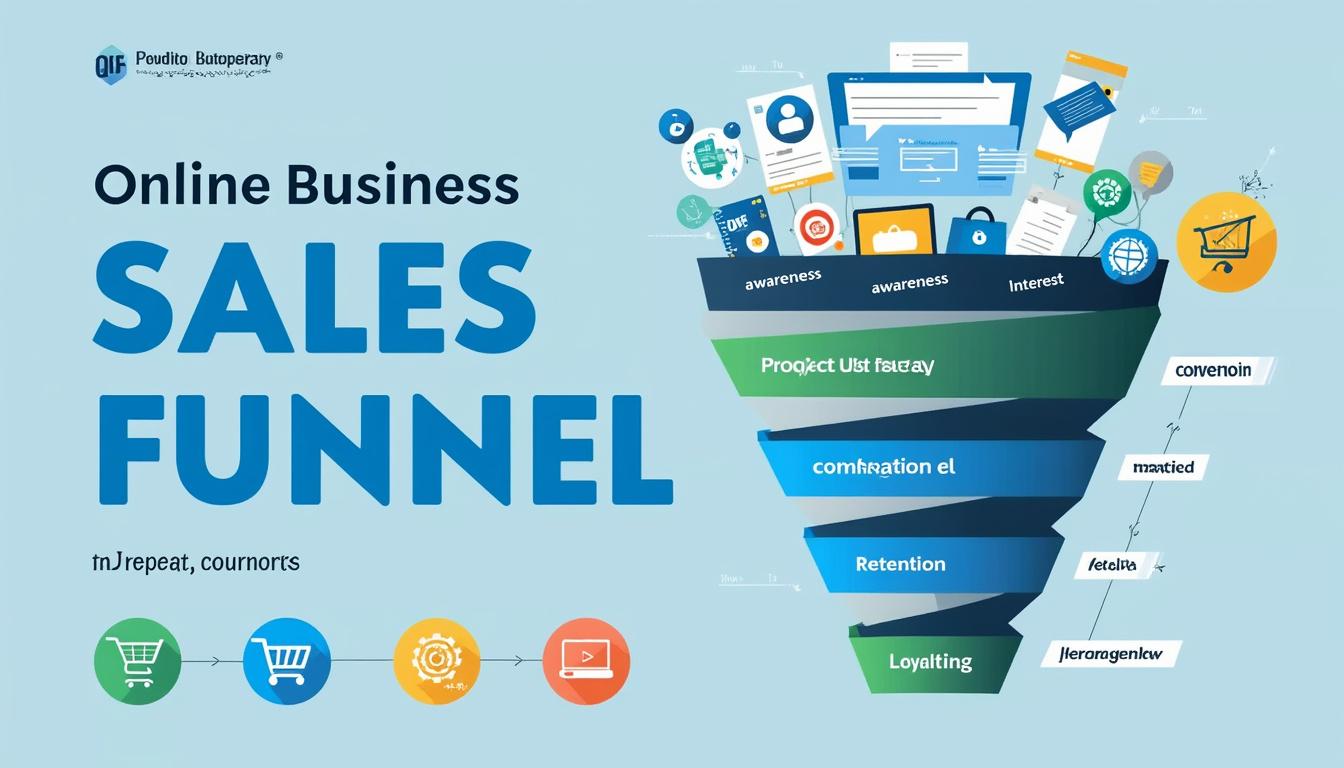
For ecommerce, this journey typically comprises five key stages:

  1. Awareness: This initial stage introduces potential customers to your brand through targeted content marketing, search engine optimization (SEO), and social advertising. The goal is to capture attention amid the noise and highlight a problem your product can solve.
  2. Consideration/Evaluation: At this juncture, prospects start comparing alternatives. Effectively crafted lead magnets—such as exclusive ebooks or webinars—draw these ideal customers into your ecosystem, converting casual viewers into nurtured leads ready for more focused communications.
  3. Purchase: This stage centers on facilitating the actual transaction. A seamless, intuitive checkout experience, with strategically placed upsells and order bumps, can significantly increase average order values, encouraging customers to commit.
  4. Post-Purchase: Following up after the initial purchase builds loyalty and encourages cross-sales. Leveraging automated email sequences through platforms like GetResponse or Kartra maintains engagement and presents relevant offers.
  5. Repeat Purchase: The ultimate goal is cultivating repeat customers and brand advocates, which demands an ongoing relationship fueled by quality products, consistent communication, and community-building techniques.

Considering some essential elements that underpin these stages highlights how ecommerce entrepreneurs can avoid funnel breakdowns that lead to wasted traffic and lost revenue. For example, cart abandonment emails triggered from platforms such as HubSpot can reclaim up to 70% of otherwise lost sales. Additionally, user-friendly navigation and transparent call-to-actions (CTAs) throughout the site eliminate the friction that frustrates and inhibits purchases.

Stage Goal Key Tactics Tools
Awareness Grab attention, raise brand presence SEO, social media ads, content marketing ClickFunnels, Leadpages, HubSpot
Consideration/Evaluation Convert visitors to leads Lead magnets, webinars, email capture forms Kajabi, GetResponse, Unbounce
Purchase Facilitate buying decision Clear CTAs, upsells, order bumps Kartra, GrooveFunnels, Builderall
Post-Purchase Enhance customer experience and retention Email sequences, cross-selling campaigns GetResponse, HubSpot, Kajabi
Repeat Purchase Produce loyal promoters Loyalty programs, community engagement, personalized offers Kartra, GrooveFunnels, HubSpot
discover how to boost your online business with effective sales funnels. learn strategies to increase conversions, automate your process, and grow your revenue online. perfect for entrepreneurs and marketers seeking results.

Creating and Optimizing Sales Funnels for Maximum Conversion Rates

In 2025, ecommerce entrepreneurs have access to an arsenal of powerful funnel-building platforms such as ClickFunnels, Kajabi, and Builderall. Yet, simply deploying these tools without strategic execution resembles launching a telescope skyward without targeting the stars. To maximize conversions, it is essential to refine each stage of the funnel based on both quantitative data and customer psychology.

Effective mapping of the customer’s journey begins with scrutinizing every touchpoint. Site navigation should guide visitors effortlessly—confusing menus or unclear product pages can shorten the sales cycle or sabotage the process completely. Further, every page should incorporate concise, compelling offers and guarantees that reduce decision-making anxiety.

One crucial tactic is implementing upsells, downsells, and order bumps. Upsells invite customers to purchase premium versions or complementary items after deciding to buy, thereby increasing average order value. Downsells provide a lower-cost alternative to retain hesitant buyers, while order bumps give an opportunity to add quick extras at checkout.

For instance, Amazon’s strategy of suggesting related products such as batteries with electronics exemplifies cross-selling—boosting revenue without additional acquisition costs. An ecommerce store selling digital courses through Kajabi might offer an advanced module as an upsell following a basic course purchase.

  • Designing email sequences that parallel buyer behavior ensures sustained engagement. Pre-purchase emails can remind customers of abandoned carts and provide exclusive discounts.
  • Post-purchase sequences can welcome customers, confirm orders, solicit feedback, and suggest future purchases, building the foundation for loyalty.
  • Exit-intent popups generate last-minute opportunities to capture potential customers before they leave, often by offering a lead magnet such as an ebook or webinar invitation.

Identifying funnel leaks requires close monitoring of metrics like cart abandonment rates, conversion rates, and customer acquisition costs (CAC). Tools integrated into HubSpot and Unbounce provide intuitive analytics dashboards for interpreting this data and testing funnel variations.

Metric Implication Optimization Strategy
Conversion Rate Percentage of visitors who complete desired action Refine CTAs, enhance product pages, implement A/B testing with Leadpages
Cart Abandonment Rate Proportion of customers who leave without purchasing Deploy automated cart recovery emails via GetResponse
Average Order Value Average revenue per purchase Use upsells and order bumps through GrooveFunnels or Kartra
Customer Lifetime Value Revenue expected from a single customer over their engagement Introduce loyalty programs and personalized campaigns

Driving Targeted Traffic to Fuel Online Business Sales Funnels Efficiently

An online business sales funnel can only thrive when it is continually fed with high-quality traffic precisely aligned with the target customer profile. This targeted influx acts much like celestial bodies funneling into a gravitational orbit, enabling conversion engines to operate at full potential.

The dominant avenues for driving ecommerce traffic in 2025 include Facebook ads, Instagram promotions, and increasing reliance on influencer marketing. Each channel boasts unique advantages:

  • Facebook Ads: Sophisticated audience targeting capabilities enable filtering by demographics, interests, and even behavioral patterns, facilitating highly relevant exposure that enhances awareness and early funnel engagement.
  • Instagram Ads: Utilizing the twin platform ecosystem with Facebook, Instagram thrives on image-driven content ideal for lifestyle branding that stimulates emotional connection with the target market.
  • Influencer Marketing: Leveraging the trust influencers have cultivated with their followers presents an authentic pathway to introduce products. Micro-influencers often outperform celebrities in engagement and ROI, offering cost-effective partnerships.

Further diversification includes tapping emerging platforms like TikTok and YouTube for dynamic video content, attracting younger audiences and boosting funnel entry rates. Notably, Gretta Van Riel’s success in multi-million dollar ecommerce brands demonstrates the synergy of influencer marketing with strategic sales funnel design.

Driving traffic is not a one-way street; retargeting ads, powered by pixels from platforms like Facebook, recapture visitors who previously engaged but did not convert, increasing chances of re-entry into the funnel.

Traffic Source Strengths Best Use Case Platform Examples
Facebook Advertising Advanced segmentation, retargeting options Brand awareness, lead generation Facebook Ads Manager, HubSpot
Instagram Advertising Visual storytelling, influencer collaborations Product launches, lifestyle branding Instagram Ads, Kajabi
Influencer Marketing Authentic endorsements, trust-building New product exposure, niche audience targeting Instagram, TikTok, YouTube

Real-World Examples Illuminating Online Business Sales Funnel Success

Putting theory to practice, studying exemplary ecommerce funnels reveals the potent mechanisms behind successful conversion strategies.

Dean Graziosi’s Free Plus Shipping Funnel: By offering a product for free and charging only shipping, Graziosi leverages the psychological appeal of “free” while strategically positioning premium upsells immediately afterward. This approach reduces acquisition cost barriers and enhances lifetime customer value.

SkinnyMeTea Free Shipping Funnel: An Australian tea company, SkinnyMeTea, exemplifies leveraging robust social proof and irresistible offers like free shipping to convert prospects. Their incorporation of user-generated content on product pages creates trust signals that embolden buyers, augmented by ads showcasing significant discounts.

Both examples underlie the principle that effective sales funnels marry persuasive content with automated communication sequences and conversion-optimized webpages. Introducing personalized follow-ups, abandoned cart reminders, and exit-intent popups ensures maximum customer engagement.

Business Funnel Type Key Element Outcome
Dean Graziosi Free Plus Shipping Immediate upsells, email follow-ups High profit margins on premium products
SkinnyMeTea Discount & Free Shipping Funnel Social proof, lead magnet opt-in, one-time offers Significant increase in conversion and email list growth
Amy Porterfield Webinar Funnel Pre-webinar surveys, automated email sequences Effective lead nurturing, consistent sales generation

Leveraging Technology and Data Analytics for Sales Funnel Mastery

Digital tools are indispensable assets in managing and optimizing online sales funnels. Solutions like HubSpot and Kartra integrate lead generation, CRM management, email marketing, and performance analytics into unified dashboards that empower entrepreneurs to track customers’ progress within the funnel seamlessly.

Monitoring KPIs—such as conversion rates, average order value, and customer lifetime value—enables data-driven experimentation and iterative improvements. These metrics not only illuminate where prospects falter but also reveal which marketing messages and offers resonate most effectively.

Moreover, A/B testing capabilities, supported by platforms like Leadpages and Unbounce, allow marketing teams to compare variations in landing page designs, call-to-action placements, or pricing strategies to continually enhance funnel efficiency. This empirical approach ensures that decision-making is grounded in direct evidence rather than intuition alone.

  • Utilize integrated analytics: Centralized tools reduce fractured data streams for clearer insights.
  • Apply continuous testing: Iterative optimization leverages small changes for cumulative gains.
  • Focus on customer experience: Even subtle interface improvements can drastically reduce abandonment.

As the 2025 business landscape grows increasingly competitive, mastering the symbiosis between technology and customer psychology will be the differentiator between ecommerce brands merely surviving and those thriving as market leaders.

What is an online business sales funnel?

It is a multi-stage process that guides potential customers through awareness, consideration, purchase, and retention to turn them into loyal buyers.

Why are upsells and order bumps important?

They increase the average order value by offering additional or premium products during or after the purchase process, enhancing revenue.

How does influencer marketing support sales funnels?

Influencer marketing reaches targeted audiences with authentic endorsements, increasing awareness and driving qualified traffic into the sales funnel.

What tools can help build effective sales funnels?

Popular platforms include ClickFunnels, Kajabi, Leadpages, Kartra, HubSpot, Builderall, Unbounce, Instapage, GetResponse, and GrooveFunnels.

How to measure sales funnel effectiveness?

By tracking KPIs such as conversion rates, average order value, cart abandonment rate, and customer lifetime value to identify areas for improvement.

online business for sale owner financing

0
discover profitable online businesses for sale with owner financing options. browse listings, get expert advice, and secure your investment with flexible payment plans today.

Owner financing has emerged as a compelling avenue in the 2025 digital marketplace, allowing entrepreneurs and buyers to transcend traditional banking limitations when acquiring online businesses. In an era where digital enterprises constitute a major share of global commerce, seller-funded financing opens doors to new possibilities for transferring ownership, often involving low down payments and flexible terms. This approach not only benefits buyers struggling with credit constraints but also provides sellers with a unique revenue stream, often earning interest over the loan tenure.

Platforms such as BizOwnerFinance, SellerFundedWeb, and DigitalAssetsFunding exemplify a burgeoning ecosystem designed to connect motivated sellers with capable buyers seeking owner financing terms. These marketplaces highlight the diversity of online ventures available—from SaaS startups and eCommerce stores to specialized blogs and apps—offering a wealth of options tailored to varied investment appetites. Sectors that once seemed out of reach due to traditional financing obstacles are now accessible through models incorporating owner financing strategies.

Key insights on online business sales with owner financing:

  • Owner financing allows buyers to purchase businesses with smaller upfront investments compared to traditional bank loans.
  • Sellers benefit from increased buyer pools, potentially commanding higher prices and earning interest over time.
  • Marketplaces like Flippa and OnlineBizDeals facilitate secure transactions using escrow and legal agreements.
  • Buyer qualification tends to be more flexible, accommodating entrepreneurs with atypical financial backgrounds.
  • The inclusion of collateral or personal guarantees remains common to mitigate seller risks.

Understanding Owner Financing in the Online Business Marketplace

Owner financing, also known as seller financing, essentially involves the business owner acting as the lender for the buyer. Instead of obtaining a loan from a bank or financial institution, the purchaser makes a down payment and negotiates monthly installments directly with the seller. This method is particularly prevalent in the online business sector, where intangible assets such as websites, apps, or digital content can be transferred with relative ease, and cash flow often guides valuation more than physical inventory does.

One illustrative example can be found in the thriving ecosystem of SellerBackedOnline ventures, where the sellers provide tailored financial packages that suit smaller entrepreneurs, allowing them to handle operational takeovers and improvements without immediate financial strain. Buyers often benefit from flexible repayment schedules adapted to their cash flow cycles. For instance, an eCommerce owner might finance a digital store via SellerFundedWeb, making a reasonable down payment while repaying the balance over a few years with interest based on net profits.

Despite the apparent advantages, the structure requires careful legal drafting. Contracts known as promissory notes are standard, formalizing the loan’s terms—principal, interest, duration, and collateral. These agreements provide protection to sellers in case of defaults, which remain a risk given the absence of traditional bank vetting processes. For buyers, it’s critical to understand the financial impact of these agreements and to evaluate the business’s earning potential thoroughly before committing.

  • Owner financing typically requires less stringent credit checks compared to institutional financing.
  • Digital assets like websites and SaaS platforms serve as collateral in many deals.
  • Sellers may include personal guarantees or additional asset pledges to secure their risk.
  • Down payments can vary widely but often start as low as 10-20% of the business price.
  • Payment terms usually range between five and seven years, with monthly installments.
Aspect Typical Terms Remarks
Down Payment 10-30% of sale price Negotiable depending on buyer credit and seller motivation
Repayment Period 5-7 years Structured monthly installments with interest applied
Interest Rate Variable, often aligned or slightly above prime rates Seller profits via interest earnings on financed amount
Collateral Business assets and sometimes personal guarantees Sellers protect investments through collateral
Legal Documentation Promissory notes & sales agreements Ensure enforceability and clarity of terms
discover online businesses for sale with owner financing options. find the perfect business opportunity that fits your budget and start your entrepreneurial journey today!

Advantages and Challenges for Buyers Using Owner Financing

The appeal of owner financing for buyers lies in its accessibility and flexibility. Entrepreneurs who might struggle to secure bank loans due to credit limits, lack of collateral, or startup histories find a welcome alternative in this model. For example, in fast-developing markets like those targeted by Pakistan Online Business Sale platforms, owner financing facilitates business transfers without cumbersome traditional loan hurdles, enabling transactional agility.

Additionally, owner-financed sales create opportunities for buyers to invest incremental capital into renovations, marketing upgrades, or inventory expansion immediately after acquisition. This phased approach often results in smoother transitions and enhanced operational performance. Buyer confidence is reinforced knowing a seller who finances the purchase trusts the underlying business viability. Furthermore, banks often recognize seller-financed equity, which can complement additional loan applications, broadening funding access.

However, certain challenges must be acknowledged.

  • Down Payment Requirements: Even with owner financing, buyers often need substantial cash resources upfront.
  • Higher Purchase Prices: Sellers may inflate prices offering financing to offset risk or capture greater value from increased buyer interest.
  • Collateral Obligations: Buyers usually pledge business assets or personal guarantees that risk personal property loss if defaults occur.
  • Transition Difficulties: Post-sale cooperation may require dealing with seller involvement or incomplete training that complicates management.

Buyers should meticulously review financing agreements and conduct due diligence on the operational health of businesses. Resources such as BizOwnerFinance and OnlineEnterpriseSales present vetted opportunities with documented cash flow and buyer protections in place.

Benefit for Buyer Potential Risk or Drawback
Easier financing qualification compared to bank loans. High upfront down payment still required.
Negotiable contract terms tailored to buyer’s capabilities. Price premiums may be applied for financing convenience.
Immediate operational control upon sale completion. Collateral and personal guarantees risk personal assets.
Seller’s vested interest often leads to seller support. Buyer-seller relationship may create operational friction.

Seller Benefits and Risks in Offering Owner Financing

Seller financing radically transforms the way business owners approach selling online enterprises. By extending credit directly, sellers attract a wider spectrum of buyers, including those disqualified by traditional financing networks. This expanded pool often translates into competitive bidding and enhanced final sale prices, as noted in marketplaces like OnlineBizDeals and DigitalBusinessFunds.

Moreover, seller financing transforms the lump-sum transaction into a reliable income stream generated by monthly payments with interest. For retiring owners or those seeking passive income streams, these monthly inflows provide steady cash flow and financial security over multiple years. Seller financing also allows owners to maintain some influence to ensure the business they built retains value under new stewardship.

  • Higher sale price potential: Attracting more buyers can raise offers.
  • Interest income: Financing returns generate ongoing revenue.
  • Passive income stream: Monthly payments supplement retirement funds.
  • Market acceleration: Sales close more quickly without bank delays.

However, these benefits exist alongside significant risks:

  • Capital tie-up: Funds remain a receivable, limiting reinvestment opportunities.
  • Default risk: Buyers may fail, triggering costly legal disputes or business repossession.
  • Operational involvement: Sellers may need to assist during transition, sometimes leading to conflicts.
Seller Benefit Seller Risk
Expanded buyer market increases sale chances. Risk of buyer default impacting income stream.
Interest income supplements sale proceeds. Possible legal costs for debt recovery.
Faster sales completion boosts liquidity timing. Locked capital unable to be deployed elsewhere.
Potential passive revenue during ownership transition. Operational entanglement during handover.

Alternative Financing Options in Online Business Purchases

Despite the attractions of owner financing, buyers often face scenarios requiring complementary financial sources. Various loan products designed for online business acquisition have surfaced, each with distinct eligibility criteria and terms. Understanding these options is critical for an informed acquisition strategy.

Business Acquisition Loans typically function as term loans provided by traditional financial institutions, offering fixed repayment schedules and usually secured by business assets. However, the qualification process can be rigorous, and lenders often require substantial down payments to mitigate risk. These loans can cover full or partial purchase prices but may require a mix with owner financing to accommodate the entire sale amount.

SBA Loans, backed by the U.S. Small Business Administration, present attractive terms through government guarantees. These loans are widely used to finance existing online businesses, allowing relatively long terms and competitive interest rates, but qualification often demands robust credit and comprehensive business financials. By combining SBA loans with SellerBackedOnline deals, buyers can optimize financing structure while spreading risk.

Private Small Business Loans and Online Business Term Loans offer agility and expedited funding through non-bank lenders. These alternatives are characterized by faster approval cycles, albeit with higher interest rates and shorter terms—trade-offs that may suit buyers needing immediate capital infusion but with less robust credit histories. Marketplaces like NetBizBuyers and OwnerWebFinancing provide platforms where such loan products can be explored in combination with owner financing to tailor purchase structures.

  • Business Acquisition Loans: traditional bank-backed, secured, potentially lower interest.
  • SBA Loans: government guaranteed, favorable rates, strict qualification.
  • Private Loans: quicker process, flexible for smaller deals, higher cost.
  • Online Term Loans: rapid funding, lenient approvals, higher interest rates.
Loan Type Typical Features Best For
Business Acquisition Loan Fixed term, secured by assets, moderate interest Established buyers with strong credit
SBA Loan Government-backed, longer repayment, low interest Buyers meeting stringent documentation requirements
Private Small Business Loan Faster approval, higher interest, less stringent credit Buyers needing swift access to funds
Online Business Term Loan Rapid funding, higher rates, easier approval New entrepreneurs or those with limited credit

Embracing a blended financing strategy that includes owner financing and one or more loan types can maximize flexibility and purchasing power. Exploring marketplaces like Online Business Sale Toronto and UK Online Business Sale Owner reveals listings that accommodate configuration of diverse financing structures, a trend predicted to expand further as online entrepreneurship continues flourishing globally.

Maximizing Success: Best Practices for Transactions with Owner Financing

Successful owner-financed transactions demand diligence, transparency, and robust legal frameworks to prevent misunderstandings and protect both parties. As digital assets become more intricate, aligning business valuation with transparent financial disclosures is paramount. Buyers should insist on independent financial audits or proof of earnings, while sellers are encouraged to provide comprehensive operational data.

Marketplace services like Flippa and DigitalBusinessFunds have incorporated structured verification processes, ensuring buyer confidence in listings advertised with terms like eCommerceOwnerLoans or DigitalAssetsFunding. Sellers offering OwnerWebFinancing also benefit from escrow services that help ensure payment compliance before control is transferred, limiting transactional risks.

  • Engage experienced legal counsel to draft promissory notes and sales contracts.
  • Conduct thorough due diligence including financial and operational assessments.
  • Utilize escrow and third-party verification platforms for secure transactions.
  • Negotiate clear terms surrounding down payments, interest rates, and collateral.
  • Plan for post-sale support, including sufficient training and transition cooperation.
Action Benefit Example
Legal Document Review Protects both buyer and seller legally Promissory notes customized by attorneys
Financial Due Diligence Prevents overpaying and uncovers risks Independent audits or cash flow verifications
Use of Escrow Services Minimizes payment and control transfer risks Flippa’s integrated offers platform
Clear Contract Negotiations Avoids disputes post-sale Detailed repayment terms with defined deadlines
Post-Sale Transition Support Ensures smoother operational takeover Structured training programs by seller

By applying these best practices, buyers and sellers navigating owner financing structures can enhance deal stability and build trust, leading to more successful business ownership transfers. For those seeking targeted listings, websites such as Online Business Sale Philippines and Edmonton Business Sale offer vetted opportunities embracing these compliance frameworks.

Is owner financing a risky arrangement for sellers?

While risks like buyer default exist, sellers can mitigate these by requiring collateral, personal guarantees, and using carefully drafted legal agreements.

Can I buy an online business with owner financing without a large down payment?

Most sellers require a significant down payment, typically 10-30%. However, this is often less than needed for conventional bank loans.

How do I protect myself during an owner-financed business purchase?

Engage legal counsel, conduct thorough due diligence, and use escrow services to safeguard all parties involved in the transaction.

Are there alternatives to owner financing if I cannot secure a seller loan?

Yes, business acquisition loans, SBA loans, and online term loans provide additional financing options that can complement or replace owner financing.

Where can I find owner-financed online businesses for sale?

Marketplaces such as Flippa, BizOwnerFinance, and SellerFundedWeb specialize in owner-financed online business listings with verified financial details.

online business for sale free

0
discover the best websites and platforms to find online businesses for sale for free. explore opportunities, compare listings, and start your journey to business ownership today!

Navigating the digital marketplace in 2025 reveals a landscape brimming with opportunities to sell your online business for free, transforming the traditional process that once demanded hefty broker fees and substantial upfront costs. The evolution of online platforms specialized in business sales provides a treasure trove of tools and communities, allowing entrepreneurs to reach wide audiences without impacting their budgets. This newfound accessibility encourages business owners to explore and capitalize on multiple avenues that widen exposure, streamline transactions, and expedite profitable exchanges. From comprehensive marketplaces to niche networks, the ecosystem now empowers sellers with various options tailored to fit different industries and business scales.

The complexity of selecting the optimal platform surfaces as entrepreneurs balance the vastness of available options with the need for targeted buyer reach. Among the plethora of choices, major players like BizBuySell, Flippa, and Empire Flippers dominate discussions by offering robust environments that combine zero-cost listings with enhanced visibility and securing serious buyers globally. Yet, distinguishing these platforms involves understanding the unique advantages, such as specialized focus areas—ranging from e-commerce to SaaS businesses—and the depth of analytical tools provided for sellers. As the market grows, so does the importance of strategic listing practices, including the perfect combination of data transparency, SEO optimization, and compelling narratives to ensure maximum traction.

  • Zero upfront listing fees: Many platforms allow free listings, eliminating a significant financial barrier for sellers.
  • Diverse platform ecosystems: From generalized exchange marketplaces to specialist sites focusing on niche markets like SaaS or digital services.
  • Global and local reach: Options to connect with buyers worldwide or target specific regions, enhancing strategic sale opportunities.
  • Marketing and support tools: Access to customizable dashboards, analytics, and advisory resources without additional fees.
  • Security and confidentiality: Platforms prioritizing secure transactions and screening processes, reducing risks associated with sensitive information sharing.

Exploring the Most Effective Free Platforms to Sell Your Online Business in 2025

With the surge in digital transactions and the entrepreneurial pursuit of growth without excess costs, several prominent platforms emerge as contestants for the title of the best place to sell a business online for free. These platforms combine extensive user bases, customized features, and inherent trust that collectively foster a seller-friendly environment conducive to business sales at no cost. Platforms such as BizBuySell, with its customizable dashboard and analytical insights, and BizQuest, known for its broad audience reach and upgrade possibilities, exemplify the blend of free access and scalable tools.

Another noteworthy contender is BusinessBroker.net, which complements its free business listings with educational resources aimed at guiding first-time sellers through the intricacies of business selling. Meanwhile, marketplaces like Flippa specialize in online businesses, offering a diverse inventory of websites, e-commerce stores, and SaaS companies. Their minimal fees and peer-to-peer support encourage sellers to harness the marketplace’s power effectively.

To illustrate, consider a medium-sized online education service seeking a seamless listing solution. Platforms like BizBuySell and Digital Exits can provide tailored exposure to buyers who understand the sector’s market dynamics. By leveraging these locations strategically, sellers can tap into curated pools of buyers without incurring fees traditionally associated with brokerage, making the process financially sensible and transparent.

Platform Key Features Best For Free Listing Availability Additional Services
BizBuySell Customizable dashboard, analytics General businesses, broad market Yes Broker services, marketing upgrades
Flippa Marketplaces for websites and apps Online businesses, SaaS, e-commerce Yes (minimal fees for some services) Business valuation tools, escrow services
BizQuest Extensive network, upgrade options Wide market, small to medium businesses Yes Featured listings, home page promotion
BusinessBroker.net Educational resources, guide for sellers First-time sellers, small businesses Yes Confidential listings, broker assistance
Empire Flippers Exclusive online marketplaces, vetted listings Established online businesses Yes, after registration Full brokerage services, escrow
discover free online business listings for sale. browse profitable opportunities, startups, and digital businesses you can buy at no cost. start your entrepreneurial journey today with zero listing fees.

Step-by-Step Approach to Listing Your Online Business for Sale Without Cost

Presenting a successful online business for sale involves more than simply uploading a listing; it demands careful preparation, valuation, marketing finesse, and engagement. The first critical step is compiling comprehensive business documentation that can satisfy the scrutiny of discerning buyers. Financial statements, operational procedures, and growth metrics form the backbone of your listing’s credibility and appeal.

Valuation stands as the next significant factor, as correct pricing drives buyer interest and expedites sales. Leveraging contemporary tools like Flippa’s free business valuation service can provide valuable benchmarks. Furthermore, sellers should choose platforms based on their business’s niche, desired market exposure, and transactional experience.

Crafting compelling descriptions supported with fresh, high-quality images transforms your listing from mundane to magnetic. Businesses that narrate their story effectively differentiate themselves, attracting buyers seeking not only financial return but also strategic alignment. Finally, continuous engagement and prompt inquiry response remain indispensable in advancing towards final sales.

  • Compile all financial and operational documents for transparency.
  • Use professional services or online tools to establish accurate valuation.
  • Select a free online platform specialized in your business category.
  • Create a well-structured, detailed, and appealing listing.
  • Proactively communicate with potential buyers and update listings as needed.
Step Action Expected Outcome
1 Gather essential documents Build buyer trust through transparency
2 Valuate business accurately Attract appropriate pricing and buyer interest
3 Choose the right free listing platform Maximize audience reach without cost
4 Create engaging, detailed listings Highlight unique selling points effectively
5 Maintain buyer engagement Accelerate sales through responsiveness

Optimizing Your Listing With SEO: Unlocking Greater Visibility

Search Engine Optimization (SEO) can markedly amplify listing visibility by aligning content with buyer search behavior. Key practices include integrating industry-specific keywords and geographical identifiers—crucial where location impacts business operations or prospects. Also important is structuring listings with concise headings and bullet points to facilitate easy browsing and immediate comprehension.

Sharing listings on social media channels multiplies audience reach and introduces additional touchpoints via hashtag strategies and community interactions. Platforms such as LinkedIn and Facebook are particularly potent in reaching professional audiences seeking viable investment opportunities or expansions, thus driving higher engagement and conversion rates.

The Importance of Engaging, Visual Listings

Attractive visuals serve as a primary engagement tool, drawing potential buyers to listings and encouraging deeper exploration. High-resolution photographs depicting business assets, key operational moments, or product offerings bridge the gap between abstract descriptions and tangible opportunities. Some sellers enhance appeal through embedded video tours or client testimonials, creating immersive experiences that differentiate their offerings in competitive marketplaces like Exchange Marketplace and SideProjectors.

Strategies to Avoid Common Pitfalls When Selling Your Business Online

Despite the numerous benefits of selling an online business for free on popular platforms, awareness of common pitfalls prevents costly mistakes. An inaccurate valuation is a pervasive issue, potentially rendering your business unattractive or undersold. Professional appraisals or automated valuation engines provide objectivity that counters emotional bias, a frequent challenge for business owners intimately connected with their ventures.

Confidentiality management also demands careful handling. Reputable platforms institute vetted buyer protocols and require nondisclosure agreements to protect sensitive information such as customer lists or trade secrets. Sacrificing privacy for accessibility can lead to reputational risks and financial losses, underscoring the need for secure online processes.

Finally, underestimating the impact of a meticulously prepared listing is another frequent error. Listings that lack detailed descriptions, possess grammatical errors, or include poor-quality photographs fail to capture serious buyers’ attention in a market crowded with polished opportunities. Engaging storytelling combined with factual clarity elevates your business profile and instills buyer confidence.

  • Seek accurate valuation through professionals or tools like Flippa’s valuation feature.
  • Maintain strict confidentiality protocols and utilize NDA measures.
  • Invest time in preparing well-written, comprehensive listings with quality images.
  • Avoid rushing and be responsive to buyer inquiries for trust building.
  • Select platforms prioritizing security features and buyer vetting.
Pitfall Consequence Mitigation Strategy
Inaccurate valuation Loss of buyer interest or undervaluation Use professional appraisal or online valuation tools
Privacy breaches Damage to business reputation and finances Implement NDAs and use secure platforms
Poor listing quality Reduced buyer engagement Craft detailed, error-free listings with strong visuals

Free Versus Paid Platforms for Selling Your Online Business: A Comparative Overview

Understanding the benefits and limitations of free versus paid platforms is essential for sellers aiming to maximize their business visibility and sale value without unnecessary expenditure. Free platforms attract sellers due to zero listing fees and easy entry; however, the vast number of listings may dilute individual business prominence. Complimentary listings on sites like WebsiteBroker or BuySellEmpire can offer substantial reach but require proactive marketing and follow-up by the seller to stand out.

Paid platforms often justify their costs with enhanced listings, targeted ads, dedicated broker support, and sometimes better buyer screening. For example, marketplaces like FE International provide full brokerage services including valuation assistance, negotiation support, and secure escrow transactions, presenting a premium but valuable service for sellers desiring speed and assurance. Deciding which path to take ultimately depends on the business’s scale, desired target audience, and seller confidence in managing sales strategy independently.

Aspect Free Platforms Paid Platforms
Cost No listing fees Upfront or success fees
Exposure High volume, less targeted More precise targeting
Support Services Minimal or self-service Professional brokerage, marketing aid
Buyer Quality Varied, unvetted Pre-screened, qualified buyers
Security Basic protections Robust verification and escrow services

What to Know About Selling Your Online Business Globally and Securely

When expanding your marketplace beyond local or national boundaries, understanding the nuances of international business sales safeguards your investment and enhances transaction success. Platforms like BusinessesForSale and Digital Exits accommodate global sellers with multilingual support and law-compliant contract templates. This reduces transactional friction and increases buyer confidence from diverse markets including Europe, Asia, and the Middle East.

Security practices remain paramount; adopting dual-factor authentication, encrypted communications, and secure payment processing minimizes cyber threats. Furthermore, sellers should remain vigilant about currency exchange rates, cross-border tax implications, and legal jurisdiction when negotiating deals to avoid unexpected costs.

Using these strategies and platforms enables a secure and far-reaching sale, opening doors to lucrative markets previously inaccessible or cost-prohibitive, such as the Dubai market or emerging economies like Bangladesh. Therefore, seller preparedness and platform selection are crucial in aligning goals with market environments.

Key Factor Considerations Suggestions
Marketplace Reach Local vs. global buyers Select platforms like BusinessesForSale for wide reach
Legal Compliance Cross-border laws and taxes Consult legal advisors before sale
Security Measures Fraud risks, data protection Use secure platforms with 2FA and encryption
Currency and Payment Exchange rates, transfer fees Opt for platforms with secure escrow services

Embarking on a journey to sell your online business brings myriad considerations. Employing free listing services on trusted platforms such as BizBuySell and Flippa coupled with robust preparation, SEO strategies, and security diligence, equips you for a rewarding and secure transaction.

How can I sell my small business quickly?

To sell a small business fast, prepare clear financial documents, price accurately by consulting experts, create attractive listings, and use popular free platforms like BizBuySell or Flippa to access a broad buyer base. Active communication with buyers and readiness to negotiate fosters quicker deals.

What website is best to sell my business for free?

Platforms such as BizBuySell, Flippa, and BizQuest are premier options offering free business listings. They provide substantial reach, secure transaction processes, and useful seller resources to facilitate smooth sales without upfront costs.

How much should I ask for my online business?

Pricing depends on revenue, profitability, business model, and market conditions. Online businesses generally sell for 2-5 times their annual profits. Utilize tools like Flippa’s free valuation to set a competitive and realistic price that attracts serious buyers.

What are common mistakes when selling online businesses?

Common errors include over or underpricing, neglecting confidentiality, poor listing quality, and inadequate buyer engagement. Avoid these by ensuring accurate valuations, protecting sensitive data with NDAs, crafting detailed listings, and maintaining prompt communication.

Is it safer to use paid business selling platforms?

Paid platforms often provide enhanced security protocols, buyer vetting, and full brokerage support which can mitigate risks. However, with careful selection, free platforms like WebsiteBroker and BuySellEmpire also offer sufficient security for many sellers. The choice depends on your comfort with managing the sales process and risk tolerance.

online business for sale flippa

0
discover a wide range of online businesses for sale on flippa. find profitable websites, e-commerce stores, saas platforms, and digital assets. start your entrepreneurial journey today with flippa’s trusted marketplace.

The digital economy is more dynamic than ever, with a growing number of entrepreneurs exploring online ventures as viable wealth-building strategies. Platforms like Flippa have revolutionized the landscape by offering marketplaces where digital enterprises—from small blogs to large e-commerce stores—are traded seamlessly. The appeal of acquiring an established online business instead of starting from scratch has tapped into the increasing demand for passive income and scalable ventures. But how does one navigate the vast ecosystem of online business sales, especially on platforms like Flippa that aggregate a wide range of opportunities? This exploration dives into the nuances of buying and selling online businesses, the nature of various digital marketplaces, and strategic considerations when seeking your next online venture.

Emerging online businesses exhibit startling growth rates in sectors such as ed-tech, digital asset selling, and service-based freelance offerings, while established niches like Amazon FBA e-commerce models continue to attract significant attention from buyers. The allure of an easy entry into online entrepreneurship, however, raises crucial questions about value, risk, and sustainability. Flippa, alongside other specialized brokers like Empire Flippers and FE International, provide diverse portfolios and valuation tools to assist buyers and sellers. The intricacies range from evaluating monthly revenues and traffic to assessing long-term potential in rapidly evolving markets. For those aiming to delve deeper, the global approach to digital asset trading and business brokerage reflects a blend of opportunity and prudence amid a competitive environment.

Understanding the Landscape of Online Business Markets on Flippa

Flippa stands as a pivotal marketplace connecting buyers and sellers of digital assets, including websites, e-commerce stores, apps, and domain names. Established in 2009, this platform resembles an auction house tailored to digital entrepreneurs. It hosts thousands of listings, which cover everything from blogs dedicated to niche topics to SaaS companies with recurring customer subscriptions. The variety reflects the multi-dimensionality of modern online businesses and the different strategies for online income generation.

An advantage of Flippa is its transparency and the availability of detailed listings that include financial information, traffic reports, and growth metrics, essential for informed decision-making. Buyers can assess an online business’s viability by examining historical data, market trends, and niche demand. For example, platforms selling educational content or online training programs have surged in prominence as remote learning remains a mainstream modality.

Several other brokers complement Flippa’s offerings in the marketplace ecosystem. Empire Flippers and FE International specialize in thoroughly vetted businesses, often larger in scale and higher in valuation, offering professional advisory services. Websites like Quiet Light, WebsiteBroker, BizBroker24, and Digital Exits provide alternatives with various market focuses and fee structures. Companies such as We Sell Your Site, Latona’s, and BuySellEmpire round out the competitive environment by catering to specific types of online business transactions, often targeting international buyers and sellers.

Key Features of a Digital Marketplace

  • Diverse asset types: Digital properties range from SaaS platforms and affiliate websites to full-fledged e-commerce stores.
  • Business valuations: Tools are available to estimate true market value based on traffic, revenue, and potential.
  • Verification processes: Some marketplaces offer in-depth due diligence to safeguard buyers.
  • Global exposure: Listings attract interest worldwide, widening the pool of potential buyers.
  • Low entry barriers: Buyers can find businesses at various price points, including startups and established enterprises.
Marketplace Specialization Average Business Price Range Additional Services
Flippa Broad digital asset marketplace $500 – $5 million Business valuation tools, auctions
Empire Flippers Vetted online businesses $30,000 – $10 million+ Brokerage, escrow, advisory
FE International SaaS, e-commerce, content sites $50,000 – $20 million+ Valuation, M&A advisory
Quiet Light Established online businesses $50,000 – $15 million Broker services, marketing
WebsiteBroker Websites and domains $1,000 – $500,000 Simple listings, auctions

Understanding these diverse marketplaces helps potential buyers align their goals with the type of service and business model they want to pursue. While Flippa is friendly to entry-level entrepreneurs seeking affordable assets, larger brokers offer more assurance for significant investments.

discover a wide range of profitable online businesses for sale on flippa. browse, buy, or sell websites, ecommerce stores, and digital assets with ease. start your online business journey today!

Identifying High-Growth Online Business Niches Suitable for Flippa Buyers

The proliferation of online business opportunities has made niche identification crucial for success. Buyers aiming to find profitable avenues on Flippa must consider sectors exhibiting rapid growth or stable demand. As of 2025, some of the fastest growing online business categories include:

  • Online education and training programs: Platforms offering courses from coding to personal wellness have seen explosive growth, supported by global digital learning trends. These businesses benefit from scalable content and recurring subscriptions.
  • Digital assets sales: Selling licenses or digital files—such as themes, graphics, or software—provides passive income streams with low overhead.
  • Content writing, blogging, and freelance services: Providing niche information or freelance services through online portals attracts consistent web traffic, monetized via advertising or direct client contracts.
  • E-commerce models: Especially those integrating Amazon Associates FBA stores or dropshipping strategies, providing accessible platforms for entry-level entrepreneurs.
  • SAAS (Software as a Service): Subscription-based software platforms tailored to specific industries are accelerating as businesses digitize workflows and customer management.

Observing these categories through Flippa reveals an array of businesses in various phases: startups, growing entities, or mature websites. This diversity offers buyers flexibility, but due diligence is imperative to assess each business’s viability and growth potential.

Additionally, newer online sectors like proptech or decentralized finance (DeFi) services increasingly appear on platforms including Flippa and others such as Digital Exits, reflecting innovations beyond traditional eCommerce or SaaS models.

Examples of Online Business Niches Popular on Flippa

Business Type Revenue Range Growth Potential Typical Buyer Profile
Online Course Platforms $1,000 – $100,000 monthly High Educators, digital marketers
E-commerce with FBA $500 – $50,000 monthly Medium-High Retail entrepreneurs
SaaS Products $3,000 – $200,000 monthly Very High Tech investors, developers
Blogs and Content Sites $100 – $10,000 monthly Variable Content creators, advertisers

Recognizing which online business niches align with one’s skills, resources, and investment appetite is key to finding a viable opportunity on Flippa or through other brokers like BizBroker24 and Latona’s. It is not unusual for entrepreneurs to use Flippa’s valuation tools to gauge starting prices and forecast investment returns before making a bid on a promising listing.

Strategic Approaches to Buying an Online Business on Flippa and Similar Platforms

Buying an online business demands a careful approach since ownership entails full responsibility for operational growth and profit generation. Flippa offers a direct marketplace where prospective buyers can browse verified listings without engaging traditional brokers’ premium fees, democratizing access to online assets.

Steps for acquiring an online business typically include:

  1. Research: Understand business models, market sectors, and current trends. Visiting resources like profitable-business.net allows comparisons across business types such as online education, beauty, or real estate sales.
  2. Due diligence: Analyze transparent data on monthly traffic, revenue streams, monthly costs, and growth patterns. It’s advisable to request documentation verifying seller claims and consult experts if needed.
  3. Interaction with sellers: Communicating with the sellers on Flippa or other platforms like Quiet Light helps clarify operational matters and gain insights about customer retention strategies.
  4. Valuation: Utilize free and paid tools to estimate the business’s worth. Flippa’s valuation tool or professional appraisals from brokers such as Empire Flippers contribute to informed decisions and bidding strategies.
  5. Transaction completion: Proceed with the purchase via secure payment options and ensure proper transfer of digital assets, domains, accounts, and customer databases.

The benefits extend beyond merely acquiring a functioning business. Buyers often inherit established SEO value, pre-existing customers, content, and operational infrastructure, enabling quicker monetization and less uncertainty than building a new site.

Step Recommended Actions Potential Pitfalls
Research Market Identify niches aligned with skills and interests Choosing oversaturated or declining markets
Due Diligence Verify financial and web traffic data Relying on unverifiable statistics or seller exaggeration
Seller Communication Clarify operational details and growth strategies Ignoring red flags or lack of transparent answers
Valuation Use multiple tools and expert advice Overpaying without considering overheads or liabilities
Transaction Use escrow or trusted payment methods Incomplete asset transfer or legal disputes

Seasoned buyers often combine platforms: Flippa for initial discovery and negotiation, transitioning to brokers like FE International or Empire Flippers for final due diligence and transaction support. This layered approach ensures a balance of affordability, transparency, and security.

Best Practices for Sellers Listing Online Businesses on Flippa

For sellers, listing an online business on Flippa involves skillful preparation and strategic marketing. Unlike traditional asset sales, digital properties require a clear presentation of statistics and growth narratives that appeal to tech-savvy buyers. Sellers who structure their listings carefully can command better prices and quicker sales.

Key seller strategies include:

  • Detailed financial disclosures: Presenting clear and well-organized revenue and expense reports establishes trust.
  • Engaging business history: Describing content creation, customer acquisition, and unique selling propositions highlights the business’s potential.
  • Professional visuals and data: Incorporating traffic graphs, customer demographics, and operational workflows enhances credibility.
  • Competitive pricing: Utilizing Flippa’s valuation tool ensures pricing is aligned with market realities, improving chances of successful bids.
  • Responsive communication: Quick and transparent responses to prospective buyers’ questions foster buyer confidence.
Seller Action Benefit Common Mistake
Financial transparency Builds buyer trust Withholding information causing suspicion
Storytelling Increases perceived value Overhyping without proof
Use of visuals Improves listing professionalism Poor or no data presentation
Realistic pricing Attracts serious buyers Asking unrealistically high prices
Effective communication Speeds up deal closure Ignoring buyer questions

Sellers can also benefit from consulting services offered by brokers like BuySellEmpire or We Sell Your Site, where expert advisors help optimize business presentations and target appropriate buyer demographics. Such proactive measures create competitive listing environments and enhance respective platform reputation.

Common Challenges and Risks When Buying or Selling on Flippa

The opportunities provided by Flippa and related marketplaces come with well-documented risks. Buyers and sellers commit significant resources, sometimes facing difficulties around valuation accuracy, fraud, or asset transition complexities. Understanding potential pitfalls is critical to protect investments and maintain confidence in online business trading.

  • Overvaluation and underperformance: Buyers might overpay for businesses where revenue dips post-sale or where traffic declines, stressing the importance of thorough verification.
  • Seller misrepresentation: Inflated claims about traffic or income can mislead buyers, underscoring the necessity for documented proofs and third-party audits when possible.
  • Technical transfer complications: Domains, hosting, content management systems, and customer lists involve complex handovers requiring legal clarity and technical competence.
  • Market saturation or declining niches: Changes in consumer preferences or regulations can erode a business’s viability swiftly.
  • Inadequate post-sale support: Buyers often depend on sellers for a smooth transition, and lack of cooperation can stall growth.
Risk Impact Mitigation
Inaccurate financials Loss of investment Request verified reports, use third-party audits
Fraudulent traffic stats Overestimation of value Analyze traffic with tools like Google Analytics
Unclear asset ownership Legal disputes Secure all contracts and transfer agreements
Rapid market shifts Business obsolescence Research current trends and future sustainability
Poor seller cooperation Operational disruption Include post-sale support terms in contracts

Platforms like Flippa have instituted measures to counteract some challenges, including seller ratings, verified listings, and transparent bidding processes. However, collaborating with trusted brokers such as Empire Flippers or FE International for higher-value deals enhances confidence. Buyers should always proceed with skepticism and corroborate all information to minimize risk.

What types of online businesses are most profitable on Flippa?

Profitable businesses often include SaaS platforms, e-commerce stores using Amazon FBA or dropshipping models, educational course providers, and content sites with steady traffic. Success depends on proper valuation and market fit.

How can I ensure I am paying a fair price for a business on Flippa?

Utilize Flippa’s business valuation tools, review historical revenue and traffic data, and compare similar listings. Consulting brokers like Empire Flippers or FE International also provides professional valuation advice.

Are there risks associated with buying online businesses on marketplaces like Flippa?

Yes, risks include misrepresented financials, traffic fraud, and asset transfer complications. Thorough due diligence and secure transaction methods mitigate these risks.

What fees can I expect when selling a business on Flippa?

Flippa charges relatively low fees compared to traditional brokers, often involving a listing fee and a success fee upon sale. Exact fees depend on business sale price and listing type.

Can I start an online business with no upfront investment?

Starting an online business typically requires minimal capital if focusing on services or dropshipping, though investing in a website and marketing is essential. Selling services online is a common entry point with low startup costs.

online continuing education business for sale

0
discover a profitable online continuing education business for sale. ideal opportunity for entrepreneurs seeking a turnkey, scalable e-learning venture with established clientele and recurring revenue.

As the demand for lifelong learning intensifies in 2025, the online continuing education sector emerges as a thriving marketplace for entrepreneurs and investors. Platforms offering flexible, accredited courses are becoming essential in professional development, bridging skill gaps while adapting to evolving job markets. This dynamic landscape ensures that businesses engaged in online continuing education present lucrative opportunities for acquisition and expansion. Whether through specialty training, broad industry certifications, or niche professional courses, these enterprises combine accessibility and expertise to meet the rising needs of learners worldwide.

Innovation fuelled by AI-powered learning solutions and digital engagement strategies heightens the appeal of education businesses on sale. Entities ranging from well-established continuing education providers with loyal healthcare professional clients, to cutting-edge EdTech platforms with expansive course libraries, are available for acquisition. Opportunities abound on marketplaces such as EduTrade Online, NextDegree Marketplace, and eLearning Exchange, where prospective buyers can evaluate prospects by turnover, market position, and growth potential. In parallel, platforms like ContinuEd Ventures and Digital Campus Sale cater specifically to advancing education business transactions, creating a fluid environment for buyers and sellers.

Capitalizing on Online Continuing Education Businesses for Sale

The market for online continuing education businesses is robust and growing, powered by persistent demand from working professionals needing to maintain certifications or acquire new skills. Healthcare, technology, energy, and corporate sectors in particular show an outsized appetite for accredited learning solutions. A strategic acquisition in this space grants access to an established base of learners, accreditations, and digital infrastructure primed for expansion.

Key advantages in acquiring such businesses include:

  • Steady Revenue Stream: Many continuing education providers enjoy recurring revenue models through subscriptions or course renewals essential for professional credentials.
  • Scalability: Digital platforms facilitate rapid scaling across regions without the need for costly physical infrastructure.
  • Diverse Course Offerings: From niche medical resuscitation courses to leadership coaching & apprenticeships, buyers can tap into specialized knowledge sectors.
  • Technological Integration: AI-enhanced course delivery improves engagement and learning outcomes, making courses more attractive.

For example, a UK-wide medical training provider delivering resuscitation certification to over 1,000 clients illustrates how niche specialization combined with geographic reach creates a resilient business model. Meanwhile, online EdTech platforms with scalable infrastructure hosting hundreds of accredited courses present immense growth prospects, appealing to investors interested in FutureLearn Brokers or OpenClassroom Deals. Buyers should evaluate businesses’ turnover, client retention, and syllabus diversity when considering acquisitions.

Business Type Location Asking Price Annual Turnover Key Strength
Medical Training Provider UK Wide Offers Invited £634,488 Accredited resuscitation courses
Online EdTech Platform Midlands, UK Wide Offers Invited £3,606,002 Scalable online course infrastructure
Leadership Coaching Consultancy South East, UK Offers Invited £356,000 Tailored workshops and retreats
Apprenticeship Provider London, South East, UK Offers Invited £1,500,000 Access to multiple public contracts

For those beginning their journey towards owning an online continuing education business, resources such as online business beginners guides can provide foundational knowledge. Additionally, marketplaces like SkillFlow Market and Academia Listings curate high-quality listings to facilitate seamless acquisitions, ensuring buyers connect with viable and profitable opportunities.

discover a profitable online continuing education business for sale. ideal opportunity for entrepreneurs or educators to step into a thriving e-learning industry with established revenue and growth potential.

Exploring Sector-Specific Opportunities in Online Continuing Education

The continuing education sector encompasses a variety of specializations catering to unique professional needs. Identifying the right niche enhances prospects of a lucrative acquisition and subsequent growth. Specific segments command attention in 2025:

  • Healthcare and Medical Training: With stringent regulatory requirements, healthcare professionals routinely seek approved continuing education. Businesses like those providing nursing, pharmacy, and medical resuscitation courses have loyal clientele and consistent demand.
  • Corporate and Leadership Development: Corporate training businesses offering tailored leadership coaching, team development, and workplace skills are vital to organizational success, which keeps corporate budgets allocated to such services.
  • Apprenticeships and Vocational Training: Apprenticeship providers registered with accreditation bodies benefit from public funding and large contracts, especially in trades, energy sectors, and early years childcare training.
  • EdTech Platforms and Digital Learning: Providers leveraging AI, adaptive learning models, and multiple course offerings online appeal to a vast demographic, including adults returning to education or changing careers.

Consider the example of an apprenticeship specialist firm focusing on dental and early years sectors commanding a turnover of £560,000, demonstrating demand for highly specialized training. Conversely, the expanding online EdTech marketplace from Midlands to UK-wide offerings boasts multimillion-pound turnovers, exemplified by platforms listed on Digital Campus Sale and ContinuEd Ventures focused on innovation and scalability.

Segment Typical Annual Turnover Growth Drivers Key Challenges
Healthcare Training £500,000 – £1,500,000 Regulatory requirements, professional certifications Compliance and accreditation upkeep
Corporate Training £300,000 – £1,000,000 Organizational development budgets, leadership demand Competition and curriculum relevance
Apprenticeships £500,000 – £2,300,000 Public funding, sector-specific trades Contract retention, funding changes
EdTech Platforms £1,000,000 – £3,600,000 Technology adoption, course diversity Technology maintenance, content updates

Engaging with industry-specific platforms such as EduTrade Online and eLearning Exchange provides insight into current offerings and pricing trends. Buyers are advised to conduct due diligence on client demographics, course approval status, and technology readiness to ensure sound investments. For global ambitions, marketplaces like BusinessBroker.net and OpenClassroom Deals offer international listings, helping diversify portfolios.

Valuation Metrics and Due Diligence for Acquiring Continuing Education Businesses

Understanding how to value online continuing education businesses is vital for a prudent investment. Valuations depend heavily on revenue stability, course accreditation, client retention rates, and the scalability of digital platforms. Sellers often base their asking price on annual turnover, but discerning buyers consider multiple quantitative and qualitative factors.

  • Revenue and Profit Margins: Sustainable profits from ongoing course sales and renewals signal healthy business operations.
  • Client Base and Retention: A loyal and returning clientele often indicates trust and relevance in the market.
  • Course Accreditation: Official recognition by certification bodies adds value and legitimacy.
  • Technology Infrastructure: Robust, user-friendly platforms ready to integrate AI or expand offerings warrant higher valuations.
  • Market Position and Competition: Businesses with unique course content or niche markets face less price pressure.

Examining the diverse range of businesses currently on sale highlights these principles:

Business Type Annual Turnover Asking Price Price to Turnover Ratio Remarks
Online EdTech Platform £3,606,002 Offers Invited Varies High scalability and technology-driven
Medical Training Provider £634,488 Offers Invited Varies Accredited healthcare courses
Leadership Coaching Consultancy £356,000 Offers Invited Typically 1x revenue Reputation-based business
Apprenticeship Provider £1,500,000 Offers Invited Typically 0.8x-1.2x revenue Public contract access

Proper due diligence should also assess liabilities, regulatory compliance, and contractual obligations to ensure a secure acquisition. Utilizing services from platforms such as NextDegree Marketplace and FutureLearn Brokers can streamline negotiation and secure favorable terms. Additionally, evaluating competitors listed on SkillFlow Market as comparables helps gauge fair market value.

Strategies to Maximize Success After Purchasing an Online Continuing Education Business

Buying an online continuing education business is just the first step; sustainable growth requires strategic action. Leveraging technology, expanding course offerings, and enhancing user experience are critical success factors in 2025’s competitive environment. Smart owners capitalize on marketplaces like OpenClassroom Deals and VirtualEdu Assets to acquire complementary assets and software tools.

  • Invest in Content Innovation: Develop AI-powered adaptive learning modules and micro-credential courses to attract and retain learners.
  • Expand Marketing Channels: Utilize digital marketing, partnerships, and affiliations to increase brand visibility and attract diverse audiences.
  • Enhance Customer Support: Provide comprehensive learner support including mentorship, forums, and certifications post-course completion.
  • Broaden Geographical Reach: Translate courses and comply with international accreditation standards to tap into global markets.
  • Leverage Data Analytics: Use learner data to refine course content, improve engagement, and forecast industry trends.

A vivid example is the dual-revenue model aesthetic training academy in London, combining accredited courses with a profitable clinical service. This synergy creates resilience and multiple income streams while fostering brand loyalty. Another approach includes establishing apprenticeship training providers engaging with public contracts to ensure steady cash flow and regulatory backing.

Strategy Benefit Implementation Example
AI-powered Adaptive Learning Improved learner engagement and outcomes Personalized course paths based on learner progress
Digital Marketing Expansion Increased enrollment and brand awareness Social media campaigns targeting professionals
Customer Support Programs Higher learner satisfaction and retention Dedicated learner mentorship and forums
Global Course Accreditation Access to international markets Partnerships with overseas certification bodies

Interested investors or entrepreneurs seeking to explore opportunities in this sector may explore listings on profitable-business.net online education business, or browse online business sale Europe for broader options. Comprehensive planning post-purchase ensures the capitalized potential of acquired online continuing education businesses.

What are the typical costs involved in acquiring an online continuing education business?

Costs include the purchase price based on business valuation, due diligence expenses, possible licensing fees, and ongoing operational costs such as updating course content and technology maintenance.

How important is accreditation for continuing education businesses?

Accreditation is crucial as it ensures courses meet industry or professional standards, attracting learners who require official certification. It greatly influences the business’s reputation and recurring revenue streams.

Can international buyers acquire online education businesses listed in the UK or US?

Yes, many platforms such as OpenClassroom Deals and FutureLearn Brokers facilitate international transactions, but buyers should ensure compliance with local education regulations and certification requirements.

What role does technology play in the success of an online continuing education business?

Technology underpins course delivery, engagement, and scalability. AI-powered adaptive learning, easy-to-navigate platforms, and robust analytics systems distinguish successful providers from competitors.

Are apprenticeship providers a good investment in the online continuing education sector?

Apprenticeship providers benefit from public funding and sector-specific demand, often providing steady income through government contracts. However, buyers should assess contract stability and regulatory changes.

online business for sale edmonton

0
discover a variety of online businesses for sale in edmonton. explore opportunities to buy a profitable web-based business and start your online venture today.

In Edmonton, the dynamics of buying online businesses unveil a landscape full of promise and calculated risks. This city stands at the crossroads of traditional commerce and digital innovation, making it an exceptional hub for entrepreneurs seeking to tap into online ventures. Investors and business owners are increasingly drawn to the rich opportunities within Edmonton’s digital marketplace, a reflection of the evolving economic structure and technological adoption.

Edmonton’s reputation as a commercial nucleus is anchored in its diverse economy, which extends beyond natural resources into thriving sectors like technology, health services, and retail. The online marketplace reflects this variety, offering opportunities ranging from niche e-commerce platforms to robust digital marketing firms. Each option holds potential for growth, driven by Edmonton’s strategic initiatives to support business ventures and its accessibility to talented professionals emerging from local educational institutions.

Furthermore, the digital age has rendered the geographical boundaries less relevant in business transactions, yet localized knowledge remains invaluable. Buyers investing in online businesses in Edmonton benefit from understanding the city’s unique market behaviors, consumer profiles, and economic incentives. These tangible factors blend with the virtual world creating a competitive, yet invigorating commercial environment.

As interest rises, platforms like BizBuySell, BusinessBroker.net, and Transworld Business Advisors enhance visibility and connectivity for online business sales, bridging local enterprise allure with global market reach. These resources empower buyers to explore diverse opportunities scientifically and confidently, engendering an entrepreneurial spirit grounded in practical insights and strategic foresight.

Therefore, Edmonton’s online business sector emerges as a compelling arena where ambition meets opportunity. Its interplay of economic stability, technological growth, and community support creates a vibrant setting for entrepreneurs ready to embrace the digital frontier and navigate the intricacies of buying businesses online.

Key Points to Understand About Online Business Sales in Edmonton:

  • Diverse Options: From digital marketing firms to e-commerce stores, the variety ensures options tailored to different skills and interests.
  • Robust Economic Environment: Edmonton’s stable economy motivates investors with reduced risks and government incentives.
  • Strong Brokerage Support: Trusted brokers like Sunbelt Business Brokers and VR Business Brokers facilitate smooth transactions.
  • Access to Skilled Workforce: The city’s universities and colleges supply talent essential for digital business success.
  • Utilization of Technology: Platforms like Empire Flippers and MergerNetwork provide international exposure for local businesses.

Exploring the Range of Online Businesses for Sale in Edmonton: Diverse Sectors and Opportunities

In Edmonton’s evolving marketplace, online businesses available for sale encompass a wide array of sectors, offering unique entry points for investors. The city’s vibrant commercial fabric includes retail e-commerce stores, digital marketing agencies, software development firms, and service-centric websites, making the business landscape richly varied.

The retail e-commerce segment in Edmonton often features stores specializing in niche products such as locally crafted goods or specialty food items. The advantage of such businesses is their alignment with Edmonton’s cultural heritage and community preferences, encouraging buyer engagement through personalized branding and product sourcing. Easily integrated with delivery logistics from platforms like LoopNet, these operations support growing consumer demand for online convenience and local authenticity.

Meanwhile, the digital marketing firms on the sale block reflect Edmonton’s emergence as a tech-forward city. Companies in this domain help local and regional businesses navigate online visibility challenges through SEO, content marketing, and social media strategies. An example can be seen with businesses listed by BusinessBroker.net, which often showcase well-established portfolios and loyal client bases, making them attractive for buyers wanting immediate cash flow and industry connections.

Another key category includes SaaS (Software as a Service) companies and app developers. These tech ventures benefit from Edmonton’s excellent access to skilled IT graduates and affordable office spaces. Buyers investing in these entities gain exposure to scalable products with subscription-based revenue streams, ensuring long-term growth potential beyond Edmonton’s borders.

Service websites offering logistics, consultancy, or home improvement services also mark Edmonton’s digital business spectrum. These require lower start-up capital while yielding solid returns, drawing interest from entrepreneurs with operational experience and local market knowledge. Platforms such as BizBuySell and Empire Flippers list many such businesses, highlighting Edmonton’s multifaceted opportunities.

Edmonton’s online business market also attracts international interest, further fueled by portals like BusinessesForSale.com and BusinessBroker.net. This global visibility enhances competition but also encourages quality listings showcasing transparency and profitability—a win-win for buyers and sellers alike.

Typical Types of Online Businesses for Sale in Edmonton:

  • Niche E-commerce Stores: Unique product offerings focused on local or specialty markets.
  • Digital Marketing Agencies: Agencies serving local businesses with SEO, PPC, and branding.
  • SaaS Companies and App Developers: Subscription-based software products with scalable growth.
  • Service-Oriented Websites: Online platforms for consulting, home services, and logistics.
Business Type Typical Price Range (CAD) Growth Potential Key Selling Points
Niche E-commerce Stores $50,000 – $500,000 Moderate to High Local market focus, tailored products
Digital Marketing Agencies $100,000 – $700,000 High Established client bases, recurring revenue
SaaS Companies $200,000 – $1,500,000+ Very High Scalable, subscription-based income
Service Websites $30,000 – $300,000 Moderate Lower overhead, strong local demand

Prospective buyers exploring the market are encouraged to use resources like VR Business Brokers, MergerNetwork, and Edmonton Business Exchange to compare options, negotiate deals, and understand sector-specific challenges. This preparation maximizes the chance to select an opportunity aligning with financial and operational goals.

discover profitable online businesses for sale in edmonton. explore a range of opportunities to buy established e-commerce, service, and digital companies in the edmonton area today.

How Edmonton’s Economic Landscape Shapes the Online Business Sale Market

Edmonton’s economic environment plays a pivotal role in defining the character and viability of online businesses for sale. Recognized for its robust and diversified economy, Edmonton combines traditional sectors with emergent digital industries, creating a fertile ground for e-commerce and tech enterprises.

One of the notable strengths of Edmonton is its low taxation framework. The city imposes no retail sales tax and maintains competitive corporate tax rates, which translates into lower operational costs for online businesses—a significant factor when selecting ventures with healthy profit margins. These policies attract entrepreneurs ready to expand or relocate their existing businesses.

The educational infrastructure, primarily through the University of Alberta and other institutions, produces a consistent stream of graduates in computer science, business, and marketing. This talent pipeline ensures that buyers inheriting an online business have access to skilled professionals, helping maintain innovation and efficiency in operations.

Economic stability, demonstrated by Edmonton’s sustained growth through fluctuations in the oil and gas sector, reassures investors against volatility. Industries supporting the oil sector, like digital service providers, benefit indirectly, creating synergy across sectors. This environment helped foster the success of companies listed on platforms like Sunbelt Business Brokers and Transworld Business Advisors, noted for connecting buyers with promising opportunities in booming segments.

Furthermore, city-supported entrepreneurship programs and grants offer essential financial incentives and mentorship, further enhancing the sustainability of online business ventures in Edmonton. This support, combined with Edmonton’s emphasis on green technology and innovation, is attracting startups and established companies alike, enhancing the online business ecosystem.

Economic Advantages Impacting Online Business Sales in Edmonton:

  • Tax Benefits: Lower corporate and zero retail sales tax improve profitability.
  • Skilled Labor Pool: Graduates from leading universities equip businesses with expertise.
  • Government Grants and Incentives: Funding and mentorship programs aid new ventures.
  • Diversified Economy: Resilience through various sectors reduces market risks.
  • Access to International Markets: Digital platforms enable Edmonton businesses to expand globally.
Economic Factor Influence on Online Business Effect for Buyers
Taxation Framework Reduced operational costs Better margins, competitive pricing
Educational Resources Availability of skilled employees Access to talent for growth and innovation
Government Support Financial grants and business advice Lower risk for business expansion
Economic Diversity Market stability and resilience Reliability and long-term potential
Digital Infrastructure Platforms like LoopNet, BusinessesForSale.com Broader reach and customer access

Understanding these factors enables prospective buyers to evaluate Edmonton businesses effectively. Coupled with expertise from brokers such as VR Business Brokers and Empire Flippers, investors can make decisions rooted in the city’s unique commercial fabric.

Strategic Steps and Resources for Buying Online Businesses in Edmonton

Successfully acquiring an online business in Edmonton requires a structured approach, combining thorough research, financial planning, and utilization of expert resources. Buyers often start by analyzing the market through dedicated platforms such as BizBuySell and BusinessBroker.net, which detail available listings with performance data, pricing, and seller disclosures.

Essential steps in the acquisition process include:

  • Market Research: Identifying industries or niches aligning with buyer expertise and market demand.
  • Financial Due Diligence: Assessing historical financial statements, profit margins, and cash flow to ensure sustainability.
  • Broker Consultation: Engaging skilled business brokers ensures access to off-market deals and professional negotiation support.
  • Legal Review: Involving business lawyers familiar with Edmonton’s regulations to oversee contracts and ownership transfer.
  • Financing Arrangements: Exploring funding options such as traditional bank loans, seller financing, or government programs like the Canada Small Business Financing Program.

Brokers from firms like Sunbelt Business Brokers and Transworld Business Advisors play a pivotal role by streamlining communications and safeguarding confidentiality during negotiations. Their local market insight complements digital tools like LoopNet and MergerNetwork, which widen the buyer’s horizon to include both local and international opportunities.

Step Purpose Tools/Resources Duration
Market Research Identify suitable business types and opportunities BizBuySell, BusinessBroker.net, LoopNet 2-4 weeks
Due Diligence Assess financial and operational health Broker reports, financial audits 2-3 weeks
Legal Review Ensure contract and ownership legality Business lawyers, legal advisors 1-2 weeks
Financing Setup Secure funding for purchase Banks, Canada Small Business Financing Program, Seller financing Varies
Closing Finalize ownership transfer Broker coordination, legal documentation 1-4 weeks

Careful attention to each step minimizes risk and enhances the potential for long-term success. Given the competitive nature of the Edmonton market, potential buyers should leverage every available support avenue, from consulting with brokers like VR Business Brokers to exploring international online business marketplaces such as online business sale Europe and business for sale Dubai.

Evaluating and Financing Online Businesses in Edmonton: Practical Approaches and Key Considerations

An accurate valuation and strategic financing are essential to acquiring an online business that delivers value and growth potential. Edmonton’s business buyers must consider unique local market variables while employing universal financial principles.

Valuation entails a careful review of financial statements, sales trends, and profitability. For instance, businesses with steady cash flow from repeat clients or subscription models generally command higher valuations. Buyers should contrast these metrics with comparable local and global listings available on sites like BusinessesForSale.com and Empire Flippers for benchmarking.

Business potential is equally critical. Prospective owners must assess competitive positioning, adaptability to market changes, and the scalability of digital platforms. Edmonton’s dynamic economy favors businesses that innovate and diversify to meet evolving consumer needs.

Regarding funding, common options include:

  • Personal Savings and Seller Financing: Buyers use personal equity alongside seller-funded portions to reduce initial loan burdens.
  • Bank Loans and Credit Lines: Financial institutions provide structured credit based on demonstrated business value and assets.
  • Government Programs: The Canada Small Business Financing Program (CSBFP) supports up to 90% of purchase price loans, easing capital access.
  • Venture Capital: Less common for smaller businesses but relevant for tech companies with high growth potential.
  • Grants and Community Funding: Local grants can provide operational support, particularly for startups supporting community development.
Funding Option Typical Amount Covered Interest/Terms Suitability
Personal Equity + Seller Financing 20-50% buyer equity; 30-50% seller financed Negotiable terms Small to medium enterprises
Bank Loans Up to 75% of assets Market rates Established businesses with collateral
Canada Small Business Financing Program Up to 90% of purchase price (max $500,000) Prime rate + 3% Small and medium enterprises
Venture Capital Variable High return expectations (~30% annually) High-growth technology firms
Grants Depends on program No repayment Startups, community development

Buyers should consult financial advisors and business brokers to tailor funding strategies, ensuring both sustainable growth and manageable risk. Resources like online business sale 20k and business for sale 1000 provide examples of affordable entry points, making entrepreneurship accessible.

Successful financing strategies complement due diligence and negotiation efforts, culminating in profitable acquisitions within Edmonton’s competitive online business market.

What types of online businesses are popular for sale in Edmonton?

Popular types include niche e-commerce stores, digital marketing agencies, SaaS companies, and service-oriented websites offering logistics or consulting. These sectors provide diverse opportunities tailored to different investor interests.

How do business brokers assist in purchasing online businesses in Edmonton?

Business brokers provide expert market knowledge, help uncover hidden listings, manage negotiations, and ensure confidentiality, simplifying the purchase process and reducing risks for buyers.

What financing options are typically available for buying an online business in Edmonton?

Common options include personal equity combined with seller financing, bank loans, government-backed programs like the Canada Small Business Financing Program, venture capital for high-growth companies, and local grants targeting community growth.

Why is Edmonton considered a favorable place to buy an online business?

Edmonton’s low taxation, skilled workforce, government incentives, and a diversified economy create a supportive environment for online business success and growth.

Where can I find online business listings specifically in Edmonton?

Platforms such as BizBuySell, BusinessBroker.net, Transworld Business Advisors, Sunbelt Business Brokers, Empire Flippers, VR Business Brokers, MergerNetwork, Edmonton Business Exchange, LoopNet, and BusinessesForSale.com regularly list Edmonton online businesses for sale with detailed information.

online business for sale europe

0
discover a wide range of profitable online businesses for sale across europe. find your next investment opportunity with our curated listings, expert advice, and secure buying process.

The European market for online businesses is witnessing unprecedented dynamism, fueled by technological advances, evolving consumer behaviors, and the increasing digitalization of commerce. Entrepreneurs seeking to expand or establish their presence face a unique environment where acquiring established online businesses is often more strategic than building from scratch. This trend reflects a broader global pattern, yet Europe’s diversity in market regulations, languages, and cultures adds layers of complexity and opportunity. The intricacy of navigating between different countries’ legal frameworks and consumer preferences demands thorough due diligence and local knowledge. Platforms dedicated to listing online businesses for sale in Europe have emerged as pivotal actors, streamlining transactions, improving transparency, and fostering trust between buyers and sellers.

In parallel, the rise of intermediaries such as Empire Flippers, FE International, and BizBuySell provides a professional backbone to this sector. Their specialized services range from vetting businesses, facilitating negotiations, to guiding post-sale integrations. Yet, for savvy investors and buyers, the challenge remains to identify the most promising opportunities amid an abundant catalog that spans e-commerce stores, SaaS products, digital marketplaces, and niche communities. For sellers, visibility and valuation accuracy become critical factors to attract suitable buyers and meet realistic expectations. The cross-border aspect of these transactions implies that market insights, technological infrastructure, and communication skills are as vital as financial metrics, forging a dynamic intersection between commerce, technology, and culture across Europe.

  • Europe’s diversified online business landscape requires tailored approaches for acquisition and sales.
  • Specialized brokerage platforms and advisory firms enhance transaction security and market visibility.
  • Cross-border complexities necessitate thorough due diligence and local market expertise.
  • Market trends favor acquisition of established businesses over startups for quicker market entry.
  • Wide range of sectors such as e-commerce, fintech, and health portals offer diverse investment options.

Expanding Horizons: Trends in the European Online Business Market

Europe’s online business ecosystem has evolved significantly, catalyzed by shifting consumer demands and the acceleration of digital transformation. Businesses across sectors like e-commerce, fintech, education technology, and healthcare portals represent a broad spectrum of opportunities for investors. Emerging trends indicate a clear inclination towards business models that leverage subscription services, marketplaces, and niche digital communities. These models not only deliver predictable revenue streams but also sustain high customer engagement levels and brand loyalty.

The presence of diverse cultures and languages across Europe encourages the creation of regionally specialized platforms. For example, an online grocery marketplace thriving in Germany may exhibit very different consumer behavior compared to a niche children-focused ecommerce portal popular in the Nordic countries. Buyers therefore must approach acquisitions with a nuanced understanding of local consumer profiles and market maturity.

Additionally, the trend of digitizing traditional industries — such as agriculture, manufacturing, or real estate — creates hybrid online business opportunities. This fusion introduces unique challenges involving regulatory compliance and localized adaptation but promises substantial rewards due to less saturated markets and underserved niches. Platforms like BusinessBroker.net and Transworld Business Advisors facilitate access to these hybrid businesses.

  • Subscription-based business growth offers stability and customer loyalty.
  • Marketplace models dominate scalable online platforms.
  • Region-specific online businesses reflect cultural and linguistic diversity.
  • Traditional industries increasingly embrace digital transformation.
  • Emerging markets in Eastern and Southern Europe present untapped potential.
Sector Typical Business Models Market Maturity Key Challenges
E-commerce Retail stores, Marketplaces, Subscription boxes Highly developed in Western Europe Logistics, compliance, competition
Fintech Payment platforms, Lending, Cryptocurrency exchanges Rapid growth, regulatory scrutiny Licensing, cybersecurity, market trust
Edutech Online courses, Tutoring platforms Expanding post-pandemic Content quality, user retention
Healthcare Portals Online consultations, Health data management Developing with strong regulations Privacy laws, data security
discover profitable online businesses for sale across europe. explore verified listings, find the perfect digital opportunity, and start your entrepreneurial journey today.

Platforms and Services Facilitating Online Business Transactions in Europe

In the digital marketplace, the significance of brokerage and listing platforms such as Empire Flippers, FE International, Flippa, and DigitalExits cannot be overstated. These entities serve as trusted intermediaries who vet listings, moderate buyer-seller interactions, and enforce confidentiality agreements. They cater to different segments, from startups to mature online enterprises, and support cross-border transactions that might otherwise be hindered by language, legal, or cultural barriers.

Each platform offers distinct features: Empire Flippers is known for its extensive vetting process, ensuring high-quality listings, while FE International specializes in technology and SaaS businesses with a focus on thorough financial due diligence. Flippa tends to attract a broader range of smaller to mid-size online businesses, making it appealing to first-time buyers and entrepreneurs. DigitalExits and Website Closers give priority to higher-value transactions, often involving multimedia assets and online marketplaces.

Services provided extend beyond mere listing to include business valuation assistance, market trend analysis, negotiation support, and post-sale transition services. These supports are vital given the varying legal requirements across the European Union, the UK, and other countries. Moreover, secure platforms enforcing non-disclosure agreements (NDAs) build confidence among parties, ensuring sensitive business information is protected until a trusted buyer-seller relationship is established.

  • Thorough vetting and quality assurance reduce buyer risks.
  • Confidentiality agreements safeguard sensitive data.
  • Cross-border legal compliance is facilitated through expert consultations.
  • Targeted support for diverse business sizes and niches.
  • Post-sale support eases ownership transition and continuity.
Platform Specialization Typical Business Size Geographical Focus
Empire Flippers Established SaaS and e-commerce Medium to large Global, including Europe
FE International Technology, SaaS, e-commerce Medium to large Primarily Europe and North America
Flippa Startups and smaller businesses Small to medium Global
Website Closers High-value Internet and tech businesses Large Global
BizBuySell Diverse sectors including online Small to large Primarily USA, growing Europe presence

Sectors Leading the Online Business Sale Market Across Europe

The European online business sale market in 2025 exhibits vibrant activity across various sectors, each presenting unique prospects and risks. E-commerce remains dominant due to its scalability and alignment with shifting shopping habits. Popular niches include health and beauty products, nutritional supplements, and children’s and babies’ items, which mirror broader societal trends toward wellness and family focus.

Software and SaaS ventures also make up a significant portion of online businesses for sale, with applications in business automation, fintech solutions, and educational technology platforms. While these businesses often require deeper technical expertise for acquisition, their recurring revenue models attract investors seeking stable cash flows.

In terms of geography, countries like Germany, France, the UK, and the Netherlands lead in volume and quality of listings. Marketplaces such as BusinessesForSale.com provide extensive listings across these countries with detailed financial metrics and ownership histories, thereby enabling sophisticated buyer decisions. Additionally, emerging economies in Eastern Europe are gaining traction for affordable acquisition costs and growth potential.

  • Health and beauty niche growing alongside wellness trends.
  • Software and SaaS companies valued for scalability and predictability.
  • Children and babies product markets show long-term demand.
  • Western Europe dominates volume; Eastern Europe offers growth potential.
  • Fintech startups attract investors with innovative financial solutions.
Industry Sector Popular Business Types Average Sale Price (GBP) Growth Potential
E-commerce Health & Beauty, Nutrition, Clothing £200,000 – £500,000 High
Software / SaaS Automation, Edutech, Fintech £300,000 – £1,500,000 Very High
Gaming & Entertainment Online Gaming Sites, Streaming £150,000 – £600,000 Moderate
Travel & Hospitality Booking Platforms, Boutique Hotels £400,000 – £1,200,000 Moderate to High

Financial Considerations and Valuation Methods in European Online Business Acquisitions

Assessing an online business’s value accurately is critical in the European market, where competition and regulatory environments vary widely. Valuation methods typically include multiples of Seller’s Discretionary Earnings (SDE), revenue multiples, or a combination tailored to the sector’s characteristics. E-commerce businesses often use a 2-3 times multiplier on net profit, while SaaS companies may reach 4-6 times annual recurring revenue due to their subscription models.

Investors must also factor in operational risks such as customer concentration, supplier reliability, website traffic sources, and dependencies on key personnel. Platforms like Latona’s and DigitalExits offer professional valuation services to aid buyers and sellers in negotiating fair prices.

Payment structures vary, from upfront cash payments to earn-outs spread over months or years. Structured deals accommodate risk-sharing, allowing sellers to remain engaged during transition phases, which optimizes business continuity. Understanding European tax implications and cross-border payment logistics is essential, mandating advice from specialized financial consultants.

  • Valuations based on SDE and revenue multiples are sector-dependent.
  • Operational risks must be scrutinized for sustainable profits.
  • Earn-outs and structured payments mitigate transaction risks.
  • Professional valuation services increase trust and fairness.
  • Tax and legal compliance is complex across different European countries.
Business Type Common Valuation Metric Typical Multiplier Key Risk Factors
E-commerce Retail Seller’s Discretionary Earnings (SDE) 2 – 3x Seasonality, supplier dependency
SaaS / Subscription Annual Recurring Revenue (ARR) 4 – 6x Churn rate, user acquisition cost
Marketplaces Gross Merchandise Volume (GMV) multiples 1.5 – 3x Regulatory compliance, liquidity
Gaming Websites Revenue multiples 2 – 4x User engagement, content licensing

Strategic Recommendations for Buyers and Sellers in the European Online Business Marketplace

For buyers targeting online businesses in Europe, acquiring established companies offers immediate access to existing customer bases, operational data, and revenue streams. Nevertheless, the decision should be underpinned by comprehensive due diligence, including financial audits, legal checks, and market validation. Resources such as BusinessBroker.net and Transworld Business Advisors assist in risk mitigation by providing expert consultancy and transaction support.

Sellers, on the other hand, benefit from platforms offering expert listings, strategic negotiation assistance, and competitive commission structures—often around 1-2%. Crafting an anonymized but compelling business profile is critical to attract qualified buyers while protecting sensitive information under stringent NDAs. This approach aligns with platforms’ requirements, promoting transparency and trust throughout the sale process.

Given Europe’s diverse landscape, engaging local legal, financial, and industry-specific advisors ensures compliance and tailored strategy. Emerging markets within Europe also offer growth trajectories for investors willing to navigate nascent regulatory environments. Weighing risks against market opportunities, both buyers and sellers must remain agile and informed to maximize value and sustainability.

  • Conduct thorough due diligence including financial, legal, and operational analysis.
  • Use specialized platforms and advisors to mitigate cross-border complexities.
  • Protect sensitive information through NDAs and anonymized listings.
  • Consider earn-outs and payment structuring to align interests.
  • Seek local expertise for regulatory and market insights.
Role Key Actions Recommended Platforms / Services
Buyer Conduct due diligence, seek legal and financial advice, verify business potential Empire Flippers, FE International, BusinessBroker.net
Seller Create secure, anonymized listings, engage in strategic negotiation, plan transition FE International, Latona’s, DigitalExits

How does the valuation process differ between e-commerce and SaaS businesses?

E-commerce businesses typically are valued based on Seller’s Discretionary Earnings (SDE) using multipliers of around 2-3x, reflecting profit. SaaS companies, however, are valued on Annual Recurring Revenue (ARR) with higher multipliers (4-6x) due to their subscription-based predictable income.

What role do NDAs play in the sale of online businesses in Europe?

Non-disclosure agreements ensure confidentiality during negotiations, protecting sensitive business data from being publicly disclosed. Platforms like Businessforsale.eu facilitate electronic NDAs, enabling secure communication between buyers and sellers.

Are there specific challenges when buying businesses across European countries?

Yes, buyers must navigate diverse legal systems, tax regulations, and cultural nuances. Engaging local advisors and using specialized brokerage services helps to address these complexities.

How do online platforms support sellers in boosting their business visibility?

Platforms offer professional listing creation, market exposure, valuation services and strategic negotiation assistance, maximizing chances of attracting serious buyers.

Is buyer verification commonly required on online business marketplaces?

Yes, verifying buyer identity enhances trust and reduces fraudulent activities on platforms. Verified buyers gain access to more detailed and confidential information about listings.